
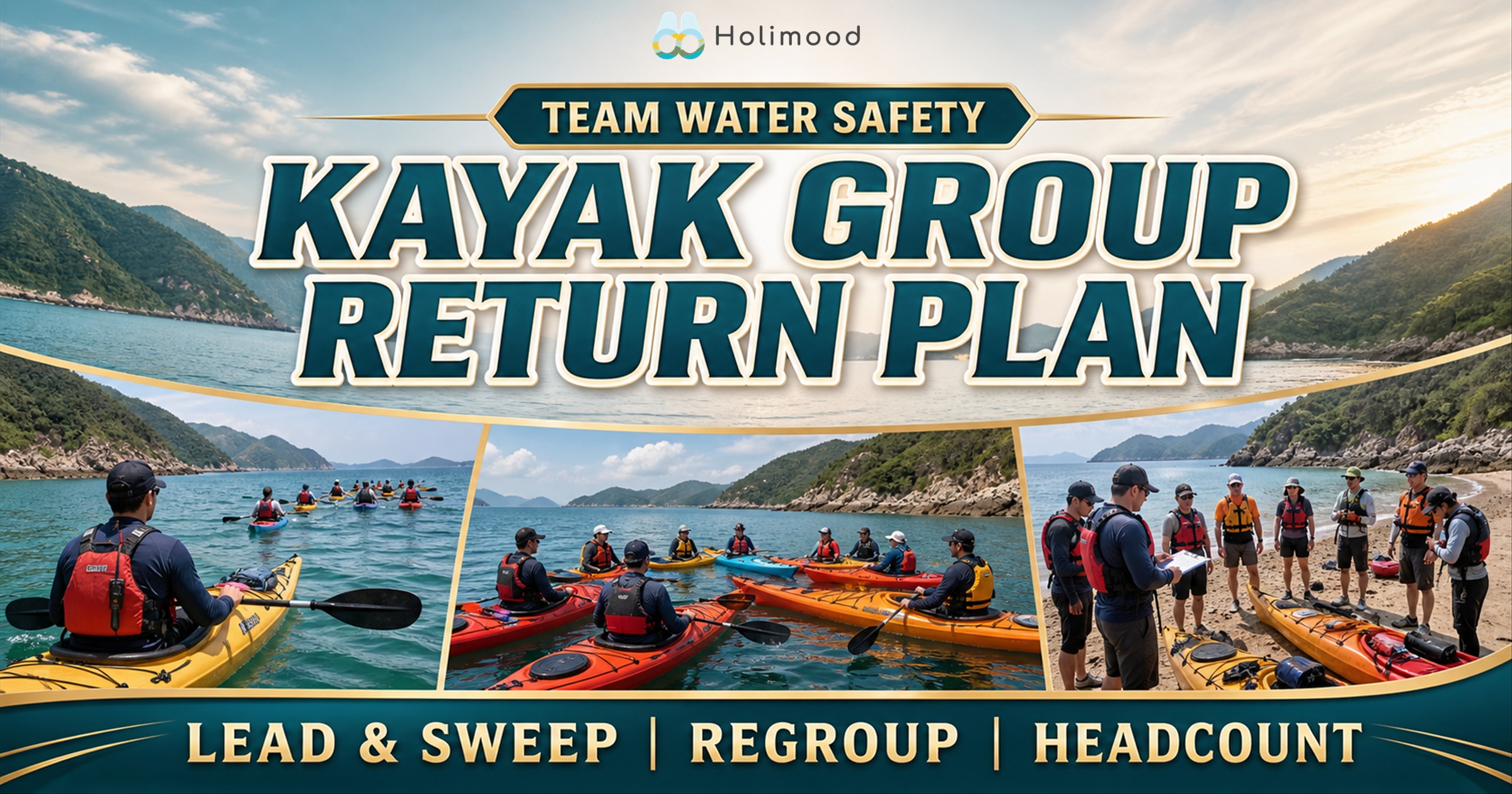
Groups often spread out on the return: the front rounds a headland while the back stops for photos, doubles turn more slowly than singles, and people disperse to showers before anybody counts shared gear. A return procedure gives everyone four clear answers: who leads, who watches the back, where the group waits, and what happens when one boat is missing.
Name a lead boat, sweep boat and small teams
The lead boat controls direction and a pace the slowest paddler can sustain; it is not a race position. The sweep keeps the final kayak in sight but should not solve problems alone. Larger groups can split into small teams with a named leader, turning one unreliable visual count into several clear check-ins.
Keep every kayak mutually visible
Use a loose line or two-column formation in open water, with spacing that still allows gestures or whistles to be understood. Tighten the group near headlands, channels, piers or busy water. The lead must not enter a blind corner until the sweep confirms the final boat. Combine this position control with a separate kayak turnaround-time plan.
Brief only five actionable points
- Names of the lead, sweep and team leaders;
- the first and final regroup points;
- stop, regroup and return signals;
- who accompanies a lagging paddler and where the main group waits;
- latest turnaround and completed gear-return time.
Ask every paddler to repeat the regroup point and return signal. Place beginners and the slowest boat in the front half, where the lead can observe them, rather than leaving all responsibility to the sweep.
Before a turn, regroup and count boats
Headlands, bay exits, open-water crossings and the start of the return are natural checkpoints. The lead stops in protected water; each small team checks in; the sweep confirms the last boat. Only then does the group turn. Drinking, footrest adjustment and seat swaps should happen at the checkpoint, not while everybody changes direction.
| Situation | Lead boat | Sweep boat | Whole group |
|---|---|---|---|
| Straight leg | Sets the slowest sustainable pace | Watches the last boat and spacing | Stays behind lead and ahead of sweep |
| Blind turn | Stops at a safe regroup area | Confirms the last kayak arrives | Counts boats and people before turning |
| Boat drops back | Holds the main group safely | Stays with a support kayak | Does not scatter or search independently |
| Shore arrival | Organises staged landings | Leaves the water last | Starts people-and-gear checks |
A photo spot is not automatically a safe checkpoint
Popular locations may have rocks, boat traffic or rebound waves. Choose stable water outside a channel, with enough room and an obvious retreat direction. Use the Hong Kong kayak and SUP guide for location context, then follow the operator’s permitted range and current instructions.
Respond to lagging, lost sight and changing weather
Do not simply tell a tired paddler to hurry
Identify the cause: fatigue, mismatched stroke timing, water in the kayak, loose equipment, seasickness or anxiety. The sweep and one support kayak remain nearby while the lead holds the main group in safe water. If the paddler cannot maintain formation after a break, shorten the route or return together.
If any kayak disappears from view, stop the group
Regroup near the last sighting in safe water and check the agreed contact route. Do not split into several search groups. Follow operator instructions and contact emergency services when there is immediate danger. Review the Marine Department safety information and the AFCD marine park code before departure.
Weather gates override the itinerary
Check the Hong Kong Observatory current weather before and during the activity. Rising wind, falling visibility, rougher water or approaching thunderstorms require the shortest clear route ashore. HKO guidance says people should get out of the water during a thunderstorm warning.
Use a two-pass shore-side count
Pass one counts people and kayaks by small-team roster, while the sweep confirms nobody remains on the water. Pass two counts paddles, PFDs, dry bags, seats and rental accessories. Individuals check personal items; one named person checks shared equipment. Only after both passes should the group split for showers, changing and transport.
- People: check names, not a visual estimate;
- Kayaks: record boat numbers, types and damage;
- Safety gear: PFDs, whistles and shared first-aid items;
- Rental gear: paddles, dry bags, locker keys and accessories;
- Incidents: report capsizes, fatigue, equipment faults or illness honestly.
Three common misconceptions
- The fastest paddler should lead. Communication and pace control matter more.
- One sweep boat can handle every problem. It needs support while the main group holds.
- Seeing everyone ashore is a headcount. People, boats and rental gear require separate checks.
Match the plan to a Holimood water activity
Compare hours, permitted range, PFDs and paddles, changing facilities, parking, storage, age conditions and severe-weather policy—not price alone. Live availability, terms and on-site route instructions remain controlling.
- Hoi Ha Wan kayak and SUP rental: include marine-park range, daytime return and shore facilities in the plan.
- Sha Ha kayak and SUP rental: account for parking, storage and shore-processing time.
- Private Sai Kung SUP session: beginners and teams can confirm instruction and meeting arrangements before extending a route.
Combine this group procedure with the water-sports safety guide. Web information cannot guarantee current sea conditions; complete a fresh check with HKO, the product page, operator and on-site staff.
FAQ
When does a group need lead and sweep boats?
Whenever kayaks may spread out, abilities or boat types differ, or beginners join. Larger groups should also split into small teams.
Should the main group keep paddling slowly when someone falls behind?
No. The lead holds the main group at a safe checkpoint while the sweep and a support kayak accompany the slower paddler.
How do we confirm everyone before a turn?
Regroup outside the blind corner, check in by small team, count kayaks and wait for the sweep to confirm the final boat.
Can a phone group replace whistles or hand signals?
No. Phones can lose signal, get wet or go unheard; keep simple nearby stop and regroup signals.
What should be counted first ashore?
People and kayaks first, then paddles, PFDs, dry bags and rental accessories before the group disperses.
This post is also available in:
 繁體中文
繁體中文  简体中文
简体中文

