
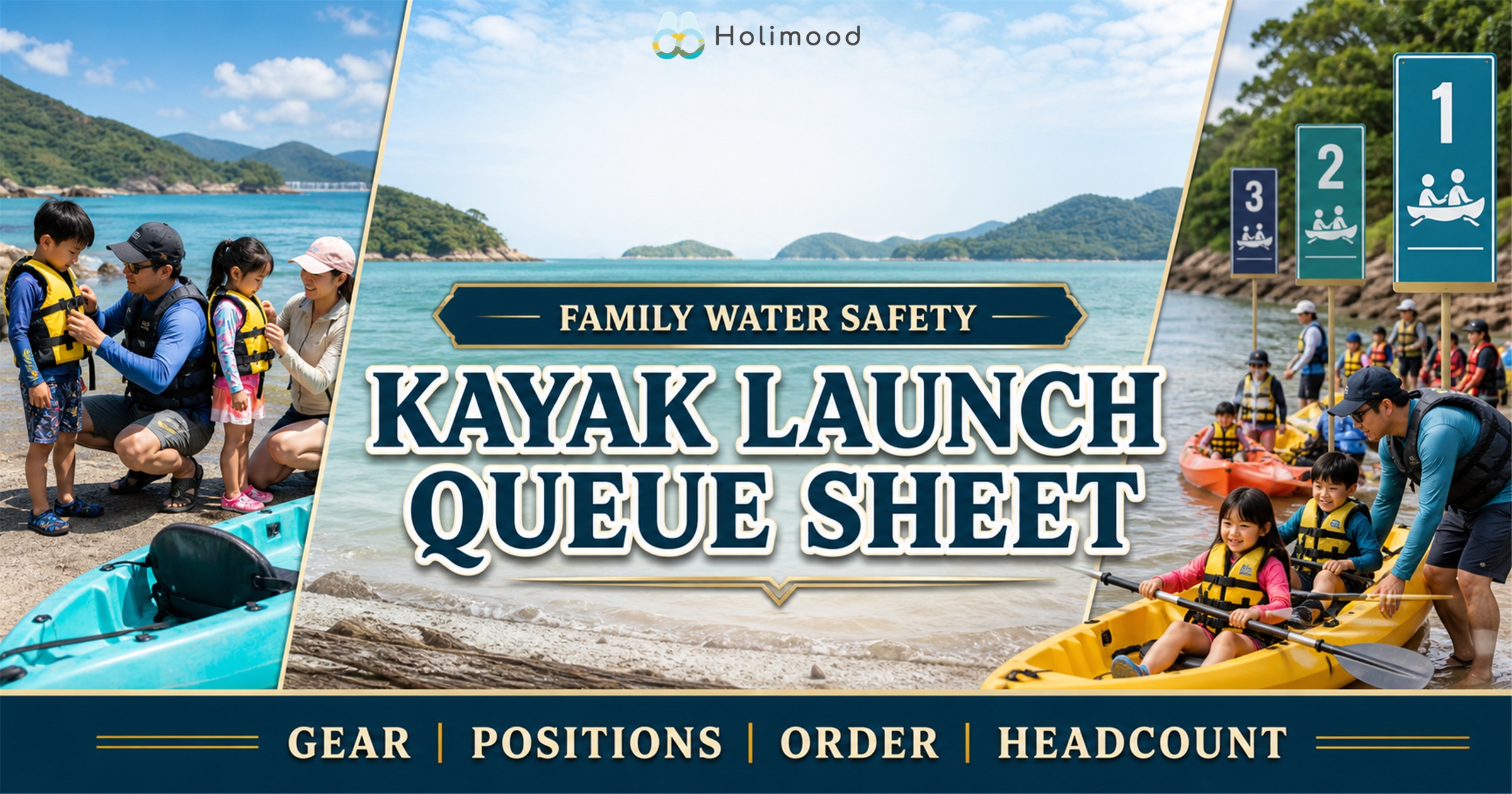
Why is an ordinary queue not enough?
An ordinary queue says who goes first, but not whether equipment fits, which adult is receiving the child, or whether a kayak has actually cleared the shore. Give every family a number and record its adults, children, kayak type and any needs before fitting begins. Children should not wait alone beside a wet ramp, and an adult holding a kayak should not leave to collect forgotten belongings.
The family adult confirms that everyone is present, life jackets are fitted and personal items are sealed. A separate headcount lead moves that family from waiting to fitting, then hands it to the launch adults. This double check reduces missed children, duplicated paddle allocation and confusion when a family withdraws.
AFCD’s marine-park guidance advises visitors to wear life jackets, act within their abilities and take responsibility for their safety. Check the latest Hong Kong Observatory thunderstorm warning and current conditions before activity begins.
How should the three shore zones work?
Waiting zone: prepare away from the water
Use a dry area that can see the launch point without blocking it. Children drink water, apply sunscreen and put on closed-toe non-slip shoes. Adults secure phones, keys and spare clothes. Keep long paddles flat in their assigned place until the family has completed its life-jacket check.
Fitting zone: check straps, shoulders and breathing room
Choose the correct life-jacket size, close every buckle and tighten the straps without restricting breathing. When an adult gently lifts the shoulder straps, the jacket should not slide over the child’s ears. If a child is nervous, demonstrate the seating and hand positions on dry ground rather than teaching on a slippery slope.
Launch zone: one kayak and two adults
Only the current family and the assigned adults enter this zone. One adult controls the stern or side from shore; the other stands where the kayak can be steadied in the water. Everyone else stays behind the boundary. The Marine Department’s boating information explains the risks of busy local waters, while visitors at Hoi Ha should follow marine-park activity guidance.
Where should adults stand, and who enters first?
For a double kayak, the more stable adult normally takes the assigned seat first, while the shore adult keeps the kayak steady and helps the child sit as instructed. The exact front-and-rear seating order depends on the craft and operator briefing. Once ready, the kayak moves to a safe near-shore holding point instead of stopping in front of the ramp for photographs.
| Stage | Child’s task | Adult position | Headcount check |
|---|---|---|---|
| Waiting | Stay in zone; hydrate and apply sunscreen | Family adult remains present | Family number, people and kayak type |
| Fitting | Fasten life jacket and wear safe footwear | One checks straps; one secures belongings | Equipment complete and secure |
| Launch | Sit as instructed; keep hands clear | One on shore; one receiving in water | People, kayak and paddles clear the shore |
| Near-shore hold | Remain seated and wait | Water adult controls spacing | Count every kayak and person again |
For two families, Family A completes fitting and launch while Family B stays behind the waiting line. B enters the fitting zone only after A has moved to the near-shore holding point. The headcount lead confirms all people and equipment before the lead family departs; the sweep adult launches last after checking that nobody remains ashore.
The schedule is not a speed target. An ill-fitting life jacket, a frightened child, deteriorating wind or thunder pauses the family’s turn. Never skip a check merely to recover the planned start time.
Why should landing reverse the launch order?
Regroup at a safe near-shore position first. An experienced kayak lands to demonstrate, shore adults take their positions, and children leave only when the craft is stable. They move directly to the dry zone instead of stopping on the ramp. The sweep kayak lands last and confirms that no participant or loose equipment remains on the water.
This shore handover complements the kayak group return procedure: the queue controls the ramp, while the return plan controls formation, regrouping and lagging kayaks during the route.
Use two counts, not one glance
- Count adults and children by family number; check changing areas and the water edge.
- Then count kayaks, paddles, life jackets, dry bags and rented accessories.
- If a count differs, close the launch lane and report it to the operator before anyone searches independently.
Three common misconceptions
“A swimmer does not need a life jacket.” Life-jacket requirements follow the operator and site briefing.
“Putting the child in first saves time.” Without adults stabilising and receiving the kayak, it increases movement and fall risk.
“The total headcount is enough.” Count by family so duplicate check-ins cannot hide a missing person.
How does the plan fit Holimood kayak and SUP services?
Compare location, kayak type, adult rules, changing and rinsing facilities, gathering space and weather arrangements—not only price. Holimood lists options including Hoi Ha Wan kayak and SUP rental, Sha Ha Road rental and a Sai Kung private SUP class. Age, supervision, equipment, timing, availability, weather changes and charges must be confirmed on the booking page and with the operator.
First-time organisers can also read the Hong Kong kayak and SUP guide, family kayak safety guide and water-sports safety preparation. Send family numbers, children’s ages and experience, preferred craft and meeting time together so operator questions remain focused.
Create family numbers, confirm life-jacket sizing and adult supervision, mark the three shore zones, and set a weather stop gate. Then check Holimood for current availability, prices and booking terms.
Frequently Asked Questions
How early should a family kayak group arrive?
Follow the booking page and operator instructions. A group should allow extra time for meeting, changing, fitting equipment and completing a headcount; the booking start time is not the arrival time.
Can one adult help several children into kayaks?
Do not assume so. Craft type, site rules, adult-to-child arrangements and minimum ages must be confirmed before booking.
What if a child decides not to launch?
Move that family back to the waiting zone, keep the lane clear, and update the people and craft counts before the next family enters fitting.
Can the original schedule continue under a thunderstorm warning?
No schedule overrides safety. Check the latest Observatory warning and follow the operator’s decision; thunder, lightning, strong wind or poor visibility triggers a stop and reassessment.
Who should keep the queue sheet?
A headcount lead who is not simultaneously stabilising a kayak should hold it. Keep paper in a waterproof sleeve or download an offline phone copy.
Prepare for the next family water activity
A simple queue sheet turns a busy shore into a verifiable handover. Children prepare in the dry zone; assigned adults stabilise, receive and count. If conditions change, stop and reset. Once the checklist is complete, compare suitable sites and current terms on Holimood.
Subscribe to the Holimood Newsletter: Receive practical family outdoor and water-activity updates.
This post is also available in:
 繁體中文
繁體中文  简体中文
简体中文

