
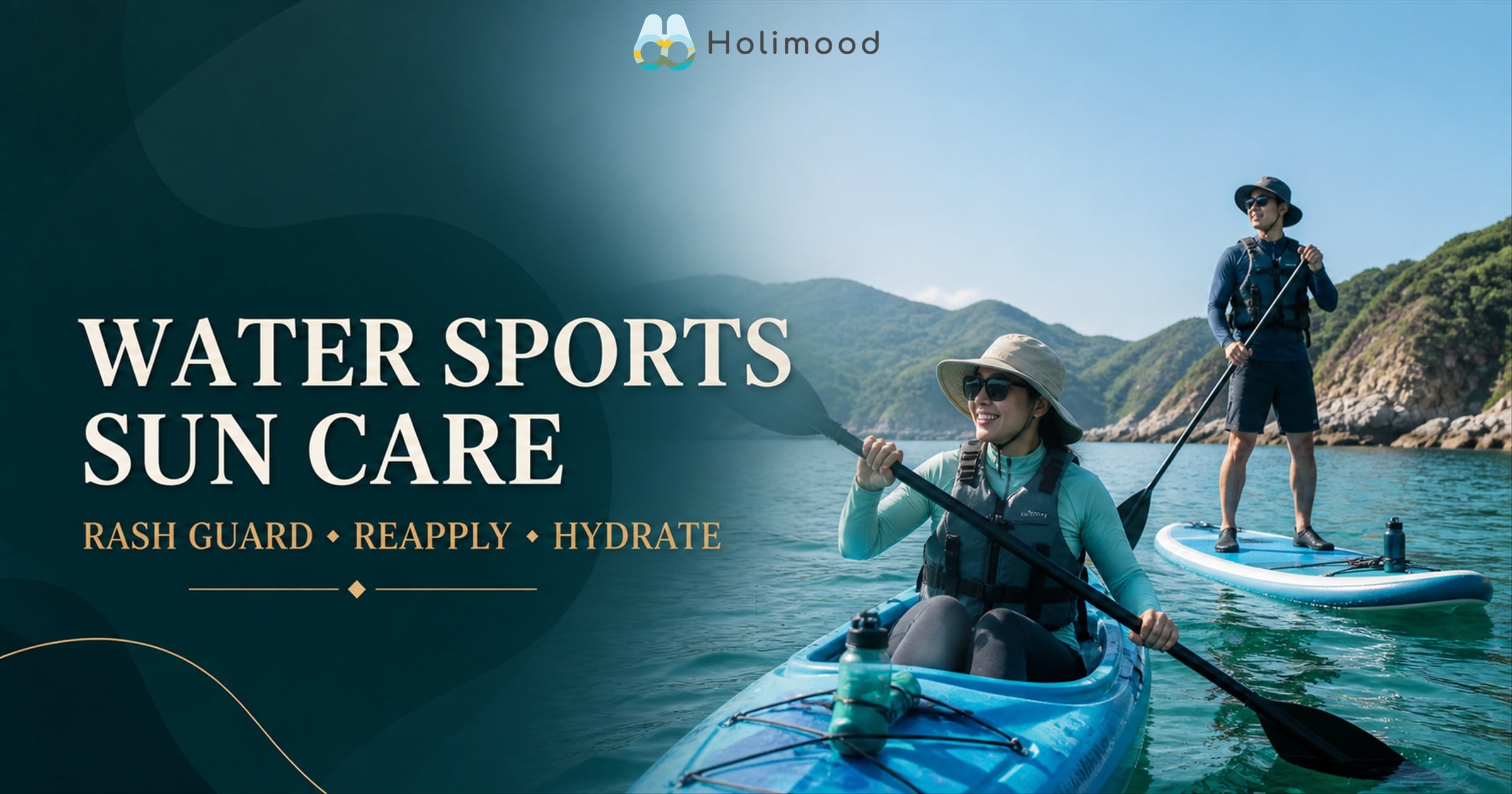
Water Sports Sun Protection Guide: Rash Guards, Sunscreen and a Hydration Timeline
Quick Answer
Check Hong Kong’s UV Index before kayaking, paddleboarding or snorkelling. Cover up with a long-sleeved quick-dry rash guard, hat and UV-blocking sunglasses; use broad-spectrum, water-resistant SPF 30+ sunscreen on exposed skin and reapply according to the label, after swimming, sweating or towelling. Keep water accessible and use timed drink-and-condition checks rather than waiting until someone feels dizzy.
This guide focuses on clothing, sunscreen labels and a workable hydration routine. For routes and rentals, use the Hong Kong kayak and SUP guide.
One-minute departure check
Pack the rash guard, hat, sunglasses strap, sunscreen and drinking water together. Set separate reapplication and hydration reminders, and shorten or postpone the trip if weather or operator advice makes launching unsuitable.
Why is protection different on the water?
The Hong Kong Observatory says summer UV levels can exceed 10 on sunny days. Water gives little UV protection and reflection can increase exposure. Sunscreen is not permission to extend the trip: reduce midday exposure, check the live UV Index and weather, and define turn-back points before launching. Stop, move to shade and seek help if anyone develops dizziness, headache, nausea, shortness of breath or confusion.
Combine coverage, sunscreen and shade
| Method | Best use | Check |
|---|---|---|
| Long-sleeved rash guard | Arms, shoulders and torso | Fit, paddle movement and performance when wet |
| Broad-spectrum water-resistant sunscreen | Face, ears, neck, hands and feet | SPF 30+, expiry, directions and 40/80-minute water-resistance label |
| Hat and UV sunglasses | Scalp, face and eyes | Secure straps; dark lenses alone do not prove UV protection |
| Shade and timing | Briefing, rest and resupply | Plan an actual landing or return point; a kayak has no shade |
What does “ocean friendly” mean?
There is no single global front-label standard that proves a sunscreen harmless to every aquatic environment. Read the full ingredients, avoid absolute claims and reduce the amount entering the water by covering up first. The US EPA recommends a long-sleeved shirt or rash guard as a practical reef-friendly approach. Human protection still comes first: choose and use sunscreen as directed, and ask a clinician or pharmacist about sensitive skin, medicines or young children.
A practical reapplication and hydration timeline
| Time | Sun protection | Water and condition check |
|---|---|---|
| Night before | Check forecast, expiry and label | Prepare one accessible bottle per person and turn-back points |
| About 15 minutes before launch | Apply to dry exposed skin; put on coverage | Start hydrated without forcing a large volume |
| Every 20-minute reminder | Check sleeves, hat and heavy sweating | Stabilise the craft, take a drink and check each person |
| After swimming, sweating or towelling | Reapply according to the 40/80-minute label | Rest in shade and reassess symptoms |
| At least every two hours | Reapply during prolonged outdoor exposure | Check supply, route and return time; shorten if needed |
The 20-minute alert is an anti-forgetting tool, not a universal fluid prescription. Needs vary with heat, humidity, intensity, health and medication. Avoid drinking a very large amount at once, and do not replace water with alcohol or highly caffeinated drinks.
Match the plan to a Holimood activity
Compare Hoi Ha Wan kayak and SUP rental, Sai Kung Sha Ha Road kayak and SUP rental, or a private beginner SUP class in Sai Kung. Confirm current equipment, session time, instruction, shower/changing facilities and weather terms on the product page and in writing. Personal sunscreen, water and health decisions remain the participant’s responsibility.
Booking check
Confirm date, time, group, experience, equipment, instruction, launch point, facilities, weather terms and each participant’s sun-and-water plan.
Frequently Asked Questions
What SPF is suitable for water sports?
Hong Kong health guidance recommends broad-spectrum, water-resistant SPF 30 or higher for outdoor activity, combined with clothing, shade and reapplication.
How often should sunscreen be reapplied?
At least every two hours during prolonged exposure, and earlier after swimming, sweating or towelling according to the product’s directions.
Can a rash guard replace sunscreen?
No. It reduces exposed area, but the face, ears, neck, hands and feet still need appropriate protection.
Does an “ocean friendly” label prove zero impact?
No. There is no single global standard; read ingredients, avoid absolute claims and cover up to reduce product entering the water.
Can someone continue after dizziness or nausea?
Stop the activity, move to a cool shaded place, seek help and obtain medical advice promptly.
Sources and editorial note
- Hong Kong Observatory UV information
- Centre for Health Protection heat and sun precautions
- US EPA reef-friendly practices
Reviewed on 9 August 2026 for general trip preparation; this is not individual medical advice.
Holimood Newsletter
Get practical checklists for Hong Kong water sports, camping, yachts and local trips.
This post is also available in:
 繁體中文
繁體中文  简体中文
简体中文

