
Quick Answer
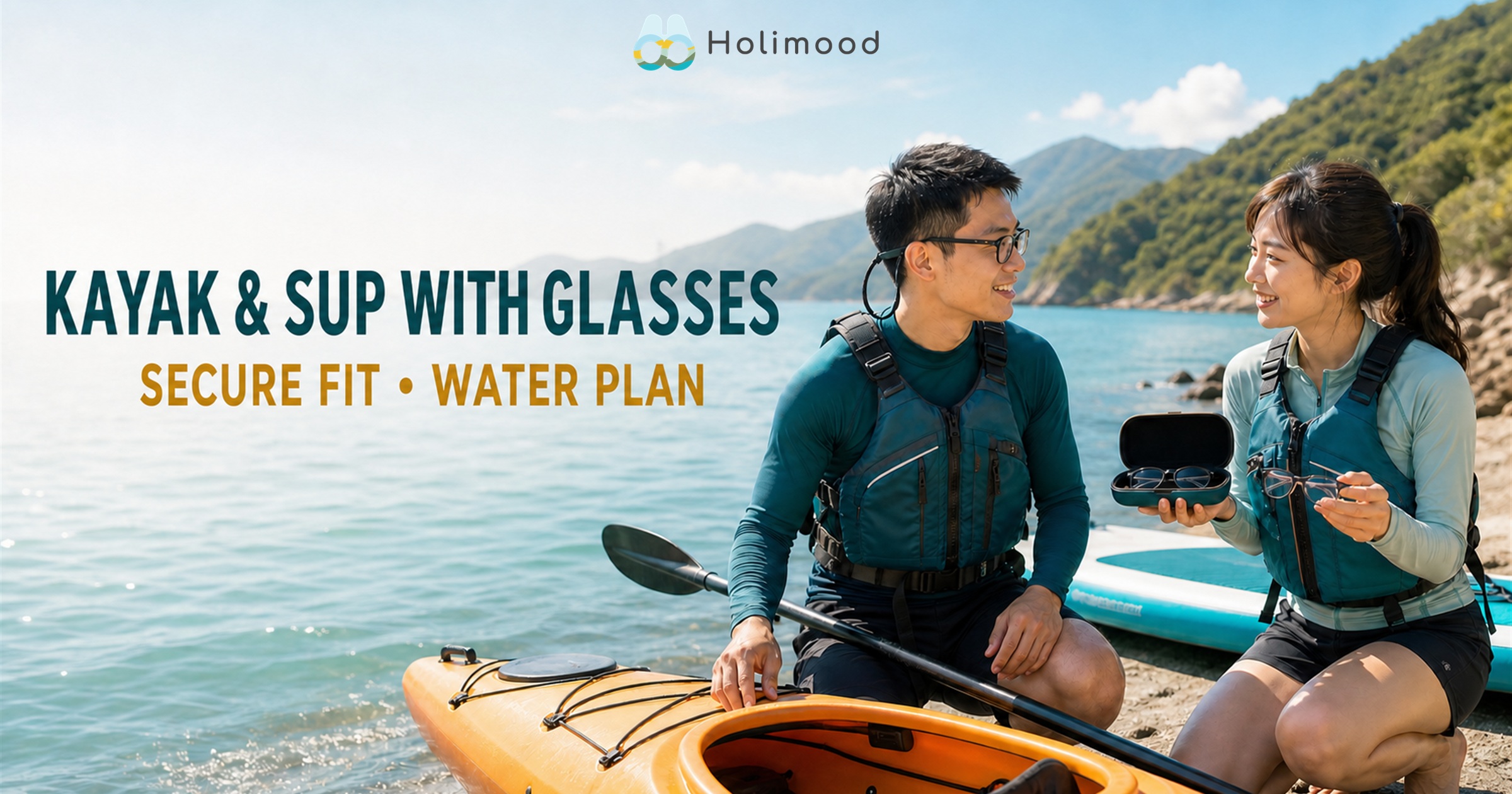
For kayaking or SUP with short sight, plan for clear vision after an unexpected capsize: secure well-fitting prescription glasses with a sport retainer, pack backup glasses in a hard waterproof case, brief a buddy, and agree on a stop-and-regroup procedure. CDC guidance recommends removing contact lenses before swimming and other water exposure.
Short sight does not automatically rule out paddling. Match vision needs, experience, water conditions, route and support. Confirm buoyancy aids, safety briefing, capsize support, storage and changing facilities before booking. Start with the Hong Kong kayak and SUP guide.
Choose by scenario, not appearance
| Scenario | Main concern | Useful preparation |
|---|---|---|
| Calm-water first session | Seeing instructors, buddies and shore | Secure glasses and a backup pair |
| SUP with frequent falls | Sudden loss of eyewear | Close retainer fit and regroup practice |
| Contact-lens user | Water exposure | Professional advice and backup glasses |
| High prescription | Vision is safety-critical | Two backups and a supported near-shore route |
Use an option you can manage safely. Do not borrow another person’s prescription or debut unfamiliar eyewear on activity day. Ask an eye-care professional about recent vision changes, discomfort or contact-lens needs.
A three-layer glasses plan
Check the frame fit
On dry land, look down, turn your head and move gently. Repair loose nose pads, temples or screws before the session. Clean lenses reduce blur from sweat, salt and sunscreen.
Fit a sport retainer
Attach it securely and test it with your buoyancy aid, hat and clothing. It should be snug without strangulation or loose cord near paddles, ropes or buckles. A retainer reduces risk; it cannot guarantee against loss, sinking or damage.
Pack usable backup vision
Place prescription backup glasses in a hard case inside a dry bag secured as the operator directs. Label it and tell your buddy where it is. Retrieve it only from a stable place, not while the craft is moving or unstable.
After a fall, stabilise the person first
Agree on five steps: stop paddling and respond; keep the buoyancy aid positioned; hold the designated craft or flotation point; tell the leader that vision is limited; return to a stable craft, shore or regroup point before using backup glasses. Never dive after dropped eyewear or separate from the group.
Tell your buddy what colours, silhouettes or high-contrast signals remain visible without glasses. Identify the leader’s clothing, craft colour and hand signal before launch. Stop and seek professional help for eye pain, redness, persistent blur or discomfort.
Choose route and communication together
Beginners should favour near-shore water with clear access, changing and rinse facilities. SUP offers open views but often involves more falls; a kayak may feel more stable but still brings spray and capsize risk. Assess wind, tide, visibility, return deadline and the weakest participant rather than choosing only for photographs.
Agree on simple phrases or signals for “I cannot see clearly”, “stop” and “backup glasses”. Place supportive paddlers ahead and behind. Stop the craft before cleaning glasses, changing equipment or handling a phone. Live instructions from staff and conditions take priority.
Practical packing list
- Primary glasses and tested sport retainer.
- Prescription backup glasses, hard case, dry bag and name label.
- Proper buoyancy aid, sun protection, drinking water and closed non-slip footwear.
- Clean lens cloth kept dry.
- Offline operator, buddy and emergency contact details.
- Hong Kong Observatory weather and warning check.
- Confirmed launch point, signals, return deadline, storage and rinse facilities.
Match the plan with Holimood options
For a facility-led start, review the Tai Mei Tuk Plover Cove kayak/SUP experience, whose listing describes buoyancy aids, basic instruction, capsize handling, changing, rinse and storage information. Compare Hoi Ha kayak/SUP rental and Sha Ha Road kayak/SUP rental for Sai Kung. Availability, facilities, price and weather terms vary; verify the current listing and obtain written confirmation.
Send Holimood the date, group size, craft choice, experience level, need to wear glasses throughout, backup-storage requirement, transport and changing needs. This helps filter products but does not replace eye-care or medical advice.
Three steps before booking
Test the eyewear retainer, waterproof the backup glasses, and agree on stop-and-regroup signals. Then verify buoyancy aids, instruction, capsize assistance, storage, rinsing and return time.
Frequently Asked Questions
Can someone with high short sight kayak or paddleboard?
Possibly, depending on functional vision, experience, route, support and professional advice. Start near shore with a buddy and usable backup glasses.
Does a retainer guarantee that glasses cannot fall off?
No. It only reduces risk. Check fit, avoid entanglement and maintain backup vision.
Can I wear contact lenses in the water?
CDC recommends removing them before swimming and water exposure because water contact raises infection risk. Seek individual advice from an eye-care professional.
Should I dive after dropped glasses?
No. Maintain flotation, stay with the group and follow staff instructions. Handle backup glasses from a stable place.
What should I ask before booking?
Confirm buoyancy aids, instruction, capsize support, route difficulty, storage, rinsing, weather changes, meeting details and return deadlines.
Sources and editorial boundary
This is general trip-planning information, not personal medical, eye-care or water-safety advice.
Holimood Newsletter
Get practical planning checklists for Hong Kong water sports, outdoor activities and group experiences.
This post is also available in:
 繁體中文
繁體中文  简体中文
简体中文

