
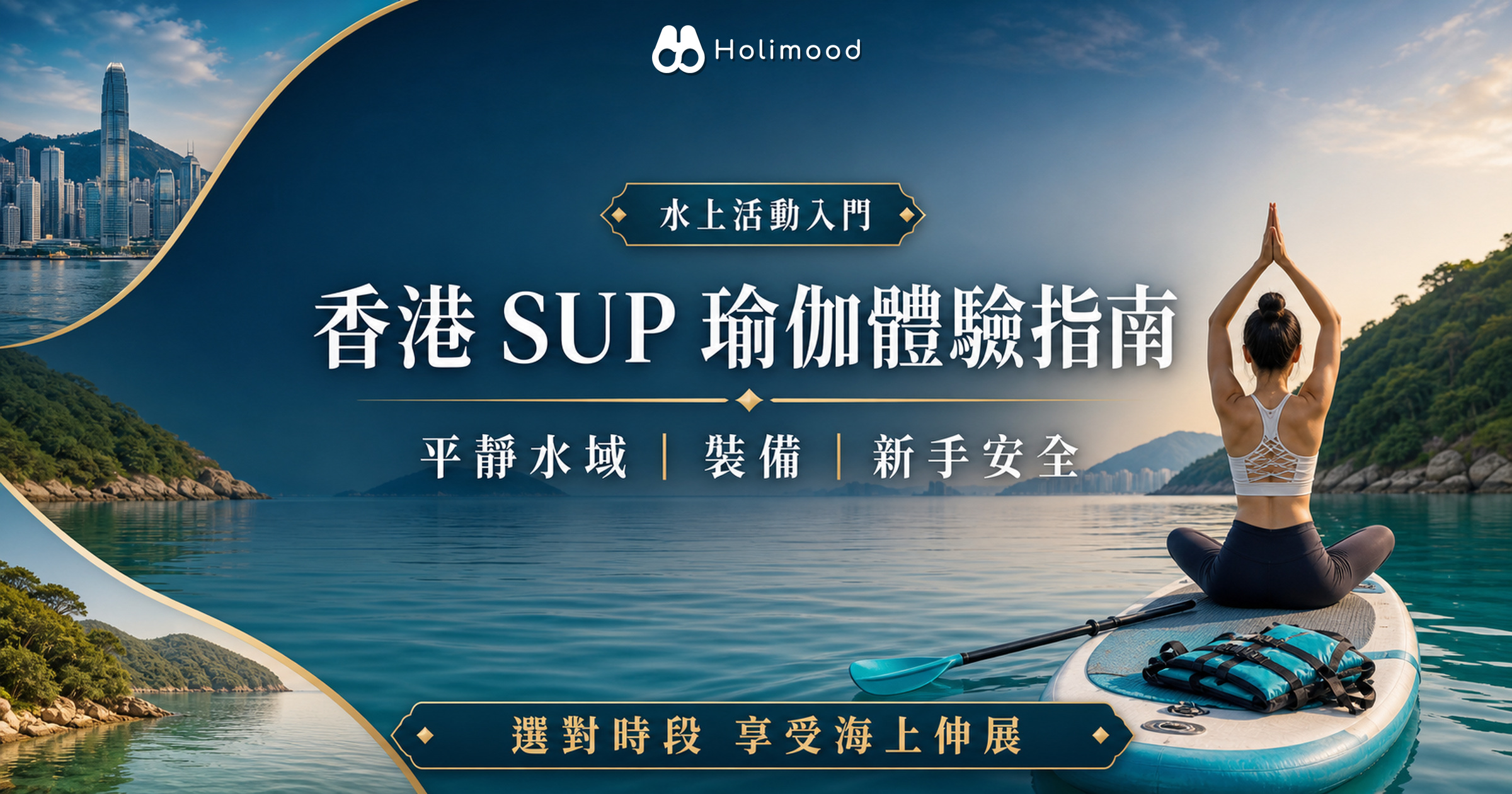
Hong Kong SUP Yoga Guide: Calm Water Spots, Gear Checklist & Beginner Safety Tips
SUP Yoga (Stand Up Paddleboard Yoga) combines the balance of water sports with the stretching and relaxation of yoga, making it one of Hong Kong’s most popular summer outdoor activities. Hong Kong has several calm water locations perfect for SUP yoga beginners, including Tai Mei Tuk Plover Cove, Sai Kung Hoi Ha Wan, and Stanley Main Beach, with paddleboard rentals starting from HK$100 for a full day.
What is SUP Yoga? How is it different from regular yoga?
SUP Yoga originated in Hawaii and brings traditional yoga poses onto a stand-up paddleboard. Because the water surface constantly moves, you need deeper core engagement to maintain balance. Compared to studio yoga, the biggest appeal of SUP yoga is the ability to practice breathing and poses while enjoying the sea breeze and sunshine — the entire experience feels more free and relaxing.
For those with existing yoga experience, SUP yoga deepens your understanding of each pose — because even slight shifts on the board affect balance, you become more attuned to body alignment and stability. For complete beginners with no yoga experience, we recommend learning basic poses on land first, or joining a guided SUP yoga experience class.
Best Calm Water Spots for SUP Yoga in Hong Kong
Choosing the right location is crucial for SUP yoga — you need calm water, minimal boat traffic, and gentle conditions. Here’s a comparison of Hong Kong’s top three SUP yoga spots:
| Location | Water Conditions | Weekday SUP Rental | Suitability | Facilities |
|---|---|---|---|---|
| Tai Mei Tuk (Plover Cove) | Sheltered bay in Tolo Harbour, relatively calm in normal weather | HK$180 | ⭐⭐⭐⭐⭐ Most Recommended | Large car park, shower/changing rooms, instruction |
| Hoi Ha Wan (Sai Kung) | Marine park, crystal clear water, rich marine life | HK$100 | ⭐⭐⭐⭐ For experienced paddlers | Freshwater rinse, individual changing rooms |
| Sha Ha Road (Sai Kung) | Sai Kung inner bay, well-equipped and convenient | HK$160 | ⭐⭐⭐⭐ Recommended | Large car park, shower/changing rooms, lockers |
Tai Mei Tuk — Top Choice for SUP Yoga Beginners
Tai Mei Tuk at Plover Cove is located in a sheltered bay within Tolo Harbour. Under normal weather conditions, the water surface has minimal waves, making it the most ideal practice location for SUP yoga beginners. The venue offers paddleboard rental services including life jackets and paddles. Staff provide basic safety instruction and paddling technique, and once you’re set up, you can freely practice yoga poses on the calm water. Tai Mei Tuk has a large car park and individual shower/changing rooms, so you can rinse off after your session.
Paddleboard rental is HK$180 on weekdays and HK$300 on weekends, available from 09:00 to 17:00. We recommend visiting on weekday mornings when winds are lighter — the water is at its calmest and yoga stability is highest.
Hoi Ha Wan — Crystal Clear Marine Park Experience
Hoi Ha Wan Marine Park has crystal-clear water and rich ecological resources. Practicing SUP yoga here lets you admire underwater coral while stretching. However, Hoi Ha Wan is within a restricted area, so check transport arrangements before heading out. Hoi Ha Wan paddleboard rental is HK$100 on weekdays and HK$150 on weekends. We recommend having some SUP experience before doing yoga at Hoi Ha Wan, as currents in certain areas may be slightly stronger than in the inner bay.
Sha Ha Road — Well-Equipped and Conveniently Located
Sha Ha Road is one of the most convenient water sports launch points in Sai Kung, featuring a large car park and comprehensive shower and changing facilities. Sha Ha Road paddleboard rental is HK$160 on weekdays and HK$300 on weekends. From Sha Ha, you can paddle to nearby coves, find a calm spot, and set up for yoga — offering great flexibility.
SUP Yoga Gear Checklist: What Do You Need?
The essential gear for SUP yoga is not complicated. Here’s the complete checklist:
Essential Gear
- Paddleboard with paddle — All Holimood rental points provide this; rental includes life jacket and paddle
- Life jacket — Strongly recommended even if you can swim
- Anti-slip yoga mat or pad — Some premium paddleboards have built-in grip pads; otherwise, bring a thin yoga mat for the board
Recommended Items
- Sunscreen (SPF50+ recommended, reapply every two hours; see HKO UV information)
- Sunglasses with floating strap
- Waterproof phone pouch
- Drinking water (at least 1L recommended)
- Quick-dry sportswear or swimsuit
- Towel and change of clothes
SUP Yoga Beginner Safety Tips
Water safety always comes first. Before heading out, always check the Hong Kong Observatory weather report and confirm there are no thunderstorm, strong wind, or rainstorm warnings. Here are key safety rules:
- Never go alone — Always paddle with at least one companion
- Warm up before getting on the board — Do 5–10 minutes of warm-up exercises on shore to reduce cramping
- Start close to shore — Beginners should practice within 20–30 metres of shore while getting used to board balance
- Check tide and current — Review tide predictions before departure; avoid practicing during extreme low or high tide
- Wear a life jacket — If a life jacket restricts movement during yoga, keep it within arm’s reach on the board
- Watch the time — Rental paddleboards must be returned by 17:00; late returns may incur extra charges
3 Common Mistakes SUP Yoga Beginners Make
Mistake 1: Attempting Advanced Poses Immediately
Many experienced yogis try inversions or advanced balancing poses as soon as they step on the board, only to fall in immediately. The correct approach is to start with simple seated poses, child’s pose, and cat-cow stretches to feel the board’s micro-movements and balance. Gradually increase difficulty after you’re comfortable. It typically takes 2–3 sessions to stably perform basic standing poses on a paddleboard.
Mistake 2: Ignoring Weather and Tides
Windy conditions create choppy water that makes the board constantly rock, making it very difficult for beginners to maintain balance. Always check the Observatory’s weather and wind speed forecast before departure — wind speeds above Force 3 are not recommended for SUP yoga. Low tide may expose rocks or the seabed, while high tide brings stronger currents. Slack tide periods are ideal.
Mistake 3: Insufficient Sun Protection and Water
On the water, direct sunlight combined with surface reflection means UV exposure is significantly higher than on land. Many beginners bring just one bottle of water and a thin layer of sunscreen, ending up sunburned and dehydrated. We recommend bringing at least 1L of drinking water and SPF50+ sunscreen, reapplying every two hours.
Who is SUP Yoga Suitable For?
SUP yoga is suitable for a wide range of people, but those with these qualities will especially enjoy it:
- Yoga enthusiasts — Looking to break through practice plateaus and deepen pose understanding in a new environment
- Water sports beginners — Paddleboarding has a low barrier; 90% of people can stand on their first try
- Stressed urbanites — Combines exercise, nature, and meditation for effective stress relief
- Friends and couples — A fun and meaningful group activity on the water
For more information on Hong Kong water sports in general, check out our Hong Kong Kayak & SUP Water Activities Guide.
FAQ: Common SUP Yoga Questions
Do I need to know how to swim for SUP yoga?
You don’t need to be an expert swimmer, but basic water comfort is recommended. There’s a good chance you’ll fall in during SUP yoga, so you should be comfortable in water and able to stay calm. Wearing a life jacket significantly reduces risk.
Is there a difference between SUP yoga boards and regular paddleboards?
SUP yoga boards are typically wider and more stable, with a larger deck area for performing yoga poses. However, for beginners, standard rental paddleboards are perfectly adequate — the key is choosing a board that’s large and stable enough. Holimood rental locations provide paddleboards suitable for practicing basic poses.
How much does it cost to try SUP yoga?
If you’re just renting a paddleboard to do yoga yourself, the cheapest option is Hoi Ha Wan at HK$100 on weekdays, or Tai Mei Tuk at HK$180 on weekdays, with weekends about HK$100 more. Some venues also offer guided SUP yoga experience classes with instructor guidance, which cost more than simple board rental.
What’s the best season for SUP yoga?
April to October is the best season in Hong Kong, with warm water temperatures and stable weather. May–June and September–October are the most comfortable months — not too hot with less rain. July–August are hottest but also peak summer season; we recommend departing at 9–10 AM to avoid the midday sun.
This post is also available in:
 繁體中文
繁體中文  简体中文
简体中文
