
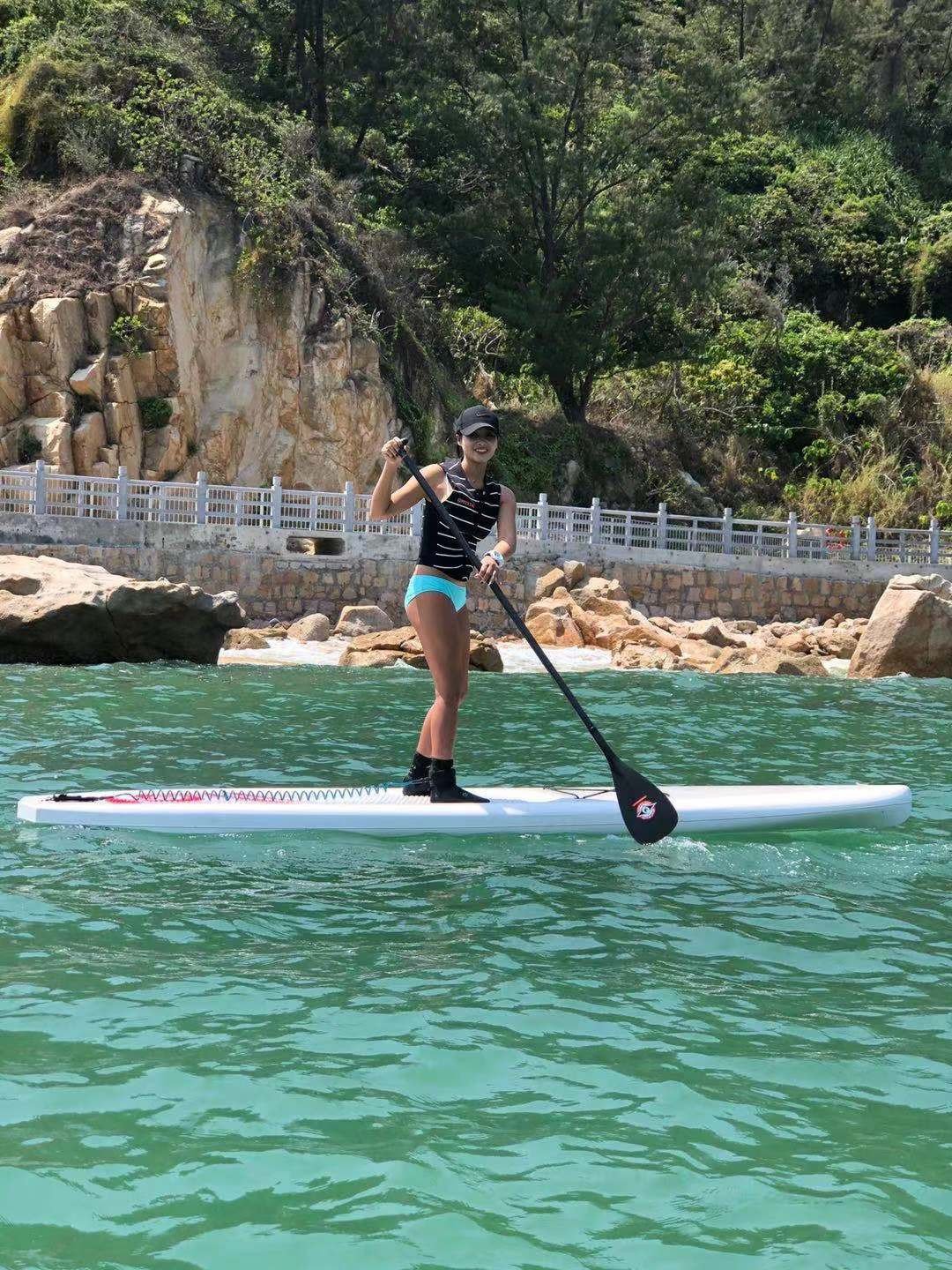
A longer SUP outing involves more than balance. You need endurance, recovery skills, judgement about wind and water, and a plan for getting back if the day changes. The routes below are discussion points for suitably experienced paddlers and qualified local instructors, not an independent navigation guide.
Route ideas compared
| Area | Indicative return time in the source | Why it demands preparation |
|---|---|---|
| Sheung Sze Wan and Green Egg Island | 1.5–2 hours. | Coastal exposure, balance and enough energy for the return. |
| Tai Mei Tuk and Ma Shi Chau | 2–4 hours. | A longer endurance outing with route and landing constraints. |
| Stanley and surrounding waters | Three hours or more. | More open water, changing wind and waves, and a greater need for local experience. |
These times are approximate source estimates. They do not establish a safe route, an approved landing or a fixed difficulty rating. Conditions can make even a short distance unsuitable.
Sheung Sze Wan: scenery is only part of the plan
The Green Egg Island area attracts paddlers for its coastal views. Ask the Sheung Sze Wan provider about the permitted area, instruction, seasonal operation, showers and storage. Do not assume a rental booking includes an island crossing or a supervised snorkelling activity.
Choose an outing that leaves a generous reserve for the return. Clear-water photographs do not guarantee visibility, safe currents or benign wind.
Tai Mei Tuk: distance and endurance
The source discusses the Ting Kok mangrove and Ma Shi Chau area for scenery and geology. Ask which routes and landings are appropriate, and protect habitats by observing without touching or collecting. Sheltered-looking parts of Tolo Harbour still require weather assessment.
Tai Mei Tuk SUP rental may be combined with a separately confirmed BBQ. Keep the paddling plan manageable rather than treating a meal reservation as a reason to rush back.
Stanley: open-water judgement
Stanley’s surrounding waters require a particularly careful discussion of wind, waves, traffic and operating boundaries. Experienced paddlers should still seek current local advice and avoid framing stronger conditions as a challenge to be conquered. Ask about Stanley SUP options and choose instruction or a guided outing where appropriate.
Three dangerous assumptions
- Good swimming is enough. SUP recovery skills, endurance, navigation and local judgement also matter.
- Sunshine means safe seas. Wind, swell and currents can be unsuitable on a bright day. Check the marine forecast and the operator’s decision.
- You can always abandon the board and swim ashore. Discuss recovery and emergency procedures in advance. Do not rely on an improvised swim from an unknown distance.
Equipment and preparation
Use a suitable board and paddle, a correctly fitting life jacket or buoyancy aid, and any leash specified by a qualified instructor for the location and activity. Leash choice is not one-size-fits-all. Bring sun protection, enough drinking water for the duration and conditions, food, and reliable protected communication equipment.
The source suggests at least 1.5 litres of water as a packing reference, but heat and duration may require more. Leave the itinerary and return time with a responsible person and agree how to request help.
Frequently asked questions
What extra equipment is needed for a longer route?
Ask a qualified local instructor to check the full safety, communication and recovery setup for the actual outing. Basic rental equipment alone may be insufficient.
What if I become exhausted?
Do not push on to a target island. Follow the recovery and assistance plan agreed before departure and request help early. Changing posture is not a substitute for assistance when you cannot return safely.
What facilities do rental centres offer?
Packages may list paddles, life jackets, showers and changing, with storage sometimes charged separately. Confirm the exact inclusions through Holimood.
Other ideas: beginner kayaking, 2024 easy hiking routes and indoor climbing and bouldering.
This post is also available in:
 繁體中文
 简体中文
