
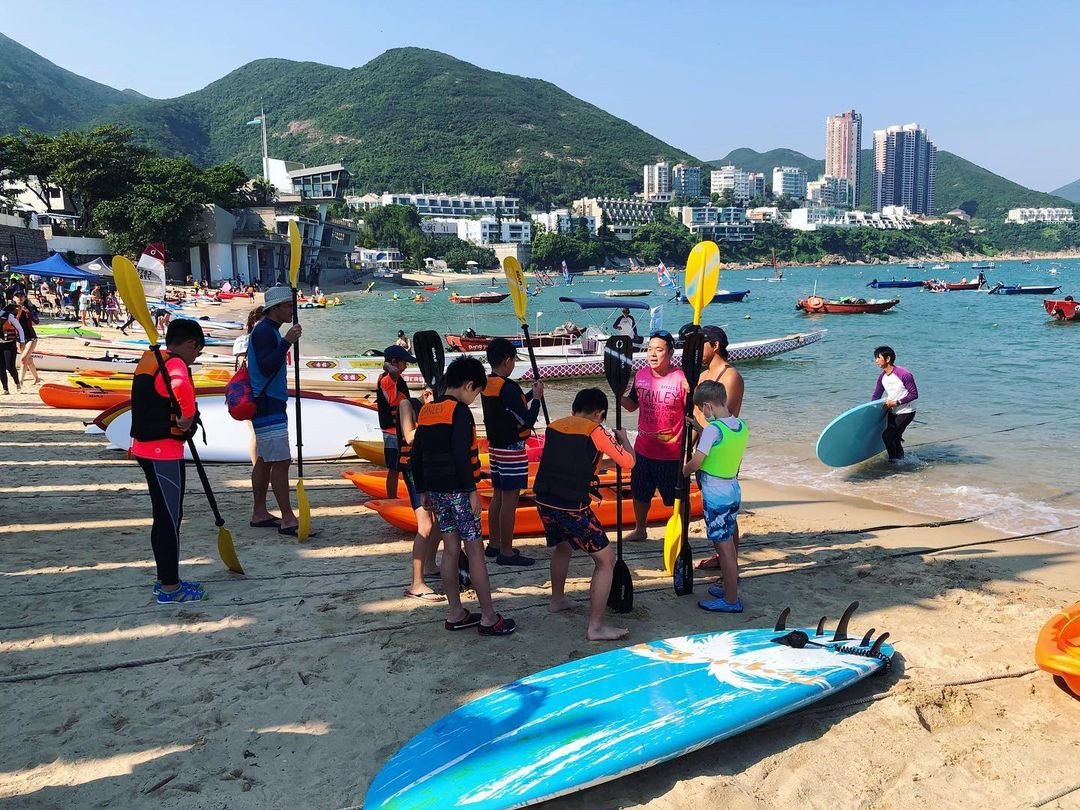
Your first stand-up paddleboarding session does not have to start standing up. Begin with a proper briefing, a suitable practice area and time to get comfortable kneeling on the board. Falling in can happen; learning how to avoid hazards and get back aboard matters more than staying dry.
What beginners usually worry about
| Question | A useful starting point |
|---|---|
| Must I stand straight away? | No. Practise balance and paddle control while kneeling first. |
| Will falling hurt? | Ask the instructor to choose an area with appropriate depth and clearance from rocks, boats and other participants. |
| What about my phone and glasses? | Secure essential items appropriately and leave valuables ashore. |
| Does rental include a lesson? | Check explicitly. A brief equipment demonstration is different from a supervised beginner session. |
From kneeling to standing
Start near the board’s centre as demonstrated by your instructor. Get used to moving the paddle and turning before attempting to stand. When ready, bring your feet into position gradually, keep your knees soft and look ahead rather than staring at your feet. There is no deadline: kneeling for longer is a sensible choice if you feel unstable.
Do not practise beside a rocky shore, in a navigation channel or in offshore winds. Swimming ability, fitness and the operator’s participation requirements still matter when wearing a buoyancy aid. Complete beginners should book suitable instruction rather than treat equipment rental as a substitute for training.
Falling in and getting back aboard
Ask for a demonstration of how to fall clear of the board and paddle, maintain contact with the equipment safely and reboard from the side near the centre. Practise only where the instructor considers it appropriate. Reboarding can be tiring, so pause, ask for help and return before fatigue makes the journey difficult.
Read the LCSD water sports safety guidance and its advice on water sports hazards. Choose and use any leash or other safety equipment according to the activity, location and qualified instructor’s advice.
What to wear and bring
- Wear quick-drying clothing, sun protection and suitable water shoes.
- Bring drinking water, a change of clothes and a towel.
- Use secured waterproof storage for a phone; avoid loose cords that could snag.
- Ask about suitable prescription water sports eyewear if needed. Do not wear contact lenses in the water: the CDC advises removing them before water activities.
- Leave jewellery, bulky bags and unnecessary valuables ashore.
Compare rental arrangements before choosing a beach
The following figures are references from the original guide, not live quotations. Check the current operating period, eligibility, equipment and weather policy before paying.
| Location | Reference arrangement | What to check |
|---|---|---|
| Sha Ha, Sai Kung | SUP rental quoted at HK$160 on weekdays and HK$300 on holidays, within 09:00–17:00. Board, paddle, life jacket, changing and shower facilities were listed. | Whether your experience meets the rental requirements and whether instruction is included. |
| Sheung Sze Wan | The listed package included basic instruction, showers and a storage bag. | The scope of supervision, permitted area and return time. |
| Stanley | Options ranged from hourly to all-day rental. | Choose a manageable session rather than paying for hours you will not use. |
Why an instructor is worth considering
An instructor can correct your stance, explain local conditions and demonstrate recovery skills. Friends may offer encouragement, but their presence does not override a provider’s swimming or experience requirements. For your first outing, a shorter supervised session can be more useful than a full day of independent rental.
Weather comes before the booking
Hong Kong’s warmer months can bring heat, sudden showers, thunderstorms and strong winds. Check the LCSD weather advice and Hong Kong Observatory thunderstorm information, then follow the operator’s decision. Sheltered-looking water is not a promise of safe conditions.
If you are comparing activities, see our beginner kayaking guide and kayak routes and rentals guide.
Frequently asked questions
Do I need to know how to swim?
Check the operator’s requirements. A life jacket does not make independent paddleboarding suitable for a non-swimmer; ask about a specifically supervised introductory option.
Is falling in normal?
It can happen. Learn safe falling and recovery techniques in an approved practice area before heading farther out.
How quickly will I stand up?
It varies. Start kneeling, learn control and stand only when you are ready.
Can I take my phone?
Use suitable waterproof storage and secure it as advised. Keeping it ashore is the simplest way to avoid loss.
Is rental the same as a lesson?
No. Confirm the duration, instructor involvement and supervision rather than assuming a demonstration is a full lesson.
What if the weather changes?
Follow the instructor’s return instructions promptly and check cancellation or rescheduling terms before booking.
This post is also available in:
 繁體中文
 简体中文
