
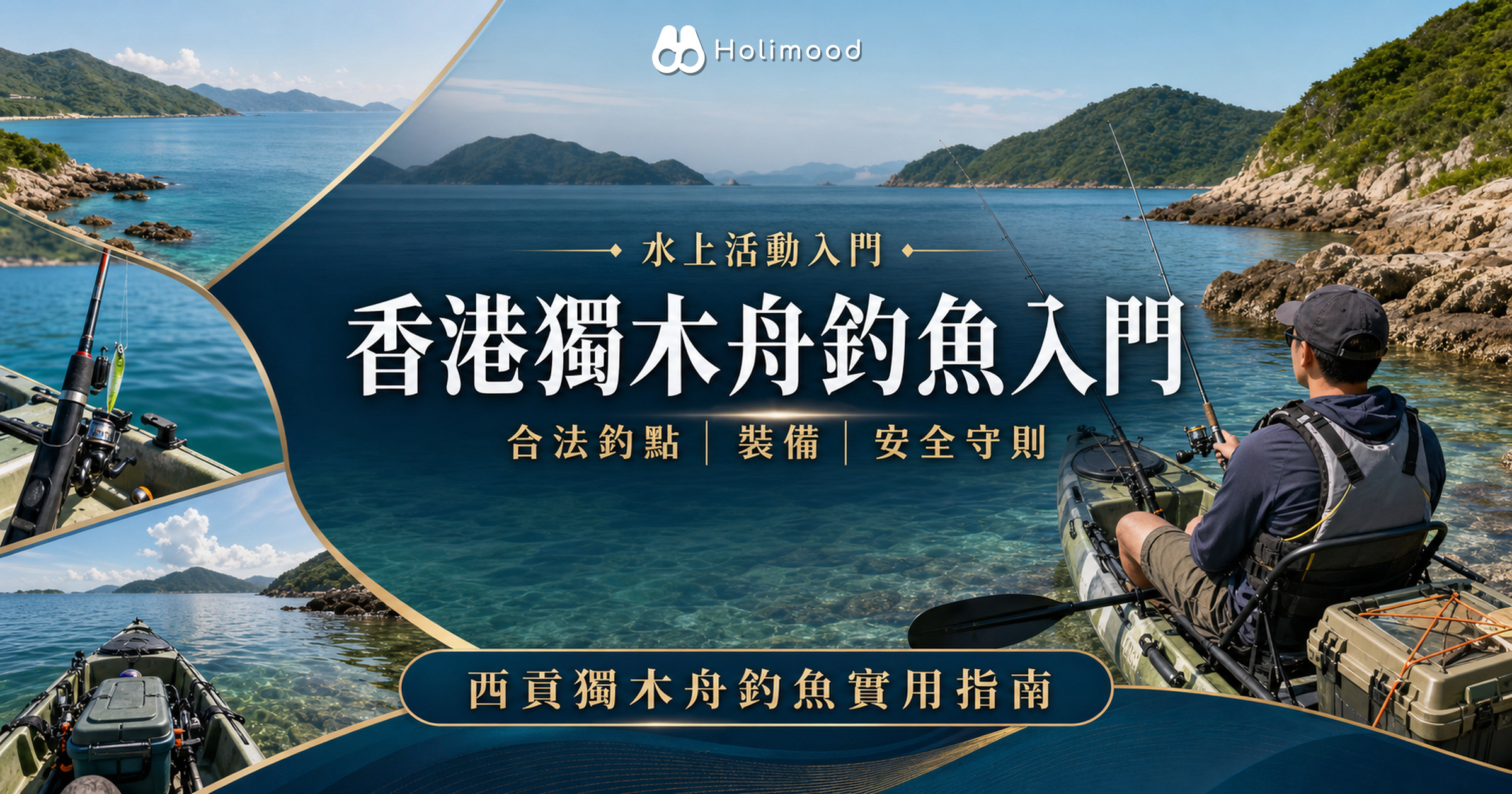
Kayak Fishing in Hong Kong: Beginner’s Guide to Legal Spots, Gear & Safety
Kayak fishing is growing in popularity in Hong Kong, combining the joy of paddling with shoreline angling. In most public waters, recreational rod fishing is legal, though marine parks and fish culture zones are exceptions. With the right location, equipment, and safety precautions, beginners can use a kayak to reach shallow reef areas and try catching local species like grouper and snapper.
To learn about kayak rental procedures, equipment, and beginner-friendly routes, check out Holimood’s complete kayak and SUP guide first.
Kayak Fishing vs Shore Fishing vs Boat Fishing: Quick Comparison
| Comparison | Kayak Fishing | Shore Fishing | Boat Fishing / Squid Tours |
|---|---|---|---|
| Cost | Kayak day rental HK$80–200 + own gear | Free (bring own gear) | Charter from HK$4,800–8,000 |
| Range | Reach rocky and shallow areas inaccessible from shore | Limited to shoreline | Covers deeper, more distant waters |
| Physical Demand | Medium to high | Low | Low |
| Group Size | 1–2 persons | Unlimited | 10+ persons |
| Safety Risk | Higher — capsizing, currents, weather | Low | Low to medium |
Is Kayak Fishing Legal in Hong Kong?
Recreational rod-and-line fishing generally does not require a licence in Hong Kong. However, the following areas have restrictions:
- Marine Parks and Reserves (e.g. Hoi Ha Wan Marine Park): Fishing requires a valid permit from AFCD. Pay attention to zoning markers when kayaking.
- Fish Culture Zones: Fishing is prohibited for non-aquaculture operators.
- Public Beaches: Fishing is generally prohibited for swimmer safety.
Check the Agriculture, Fisheries and Conservation Department (AFCD) website before departure. “Legal” does not mean “safe” — currents, wind, and shipping lanes must also be assessed.
Kayak Fishing Gear Checklist
Kayak fishing gear falls into two categories: paddling equipment and fishing equipment. Holimood kayak rentals typically include a life jacket and paddle; fishing gear must be self-provided.
Paddling Equipment
- Kayak: Choose a sit-on-top model for stability. Tandem kayaks allow one person to paddle while the other fishes.
- Life Jacket: Always worn at sea.
- Dry Bag: Protects phone and spare clothes.
- Non-slip Shoes: Essential for rocky shore launches.
Fishing Equipment (Self-prepared)
- Short Rod: Use a rod under 6 feet for easier handling.
- Tackle Box: Secured to the kayak to prevent spillage.
- Lures or Live Bait: Soft plastic lures or live shrimp work near Sai Kung.
- Fish Stringer or Bucket: For temporary catch storage.
- Pliers and Gloves: For hook removal and handling toothy fish.
Recommended Kayak Fishing Launch Points in Sai Kung
Sai Kung is the best area for kayak fishing in Hong Kong — clear water, numerous islands, and rich reef ecology. Both locations below offer kayak rental through Holimood with changing rooms and life jacket loan:
Sai Kung Sha Ha Road
Features a large car park suitable for self-driving. Paddle to Sharp Island reef areas. Relatively gentle currents. Sha Ha Road kayak rental offers single and double kayaks from HK$100.
Sai Kung Hoi Ha Wan
Hoi Ha Wan is a marine park — fishing without a permit is prohibited. However, Sai Kung waters outside the restricted boundary remain legal. Confirm paddle range with the Hoi Ha Wan rental point.
To practice water balance before kayak fishing, consider the Sai Kung SUP experience class (private group).
Common Catch Species & Seasons
- Grouper: Common in spring/summer, hides in reef crevices.
- Snapper (Lutjanus russelli): Year-round, more active in spring/summer.
- Bonito: Summer/autumn, strong fighting fish.
- Mullet: Autumn/winter near shore.
Catch depends on season, water temperature, tides, and sea conditions. Treat kayak fishing as a combined paddling and angling experience. Check Hong Kong Observatory for tide forecasts.
3 Common Beginner Misconceptions
Misconception 1: Any kayak works for fishing
Narrow racing kayaks are too unstable. Choose a wider, shorter sit-on-top kayak with a flat bottom and low centre of gravity.
Misconception 2: Going further means more fish
Nearshore reef edges and current junctions often hold more fish than open water. Stay within 500m of the launch point as a beginner.
Misconception 3: Calm weather means safe conditions
Calm surface does not mean safe currents. Tide changes can dramatically increase flow speed, especially in narrow channels between islands. Check tide tables and wind forecasts. See Hong Kong Marine Department.
Safety Rules: Read Before Departure
- Always wear a life jacket.
- Avoid shipping lanes. Kayaks are small and hard for large vessels to see.
- Paddle in pairs — at least two kayaks.
- Bring communication devices in a waterproof bag.
- Monitor weather changes. Cancel immediately for thunderstorm, strong wind, or tropical cyclone warnings.
- Inform a shore contact of your destination and expected return time.
Start Your Kayak Fishing Trip with Holimood
Holimood offers kayak and SUP rental at multiple Sai Kung locations. Rental packages include life jacket, paddle, changing room, and fresh water rinse facilities. The platform has over 10 years of licensed travel agency experience, with transparent pricing, usage times, and parking information. Payment methods include Visa, Mastercard, PayMe, AliPay HK, FPS, and WeChat Pay.
Note: Holimood kayak rentals focus on paddling experiences and do not provide fishing gear or instruction. To compare locations and prices, visit the Holimood water activities page.
FAQ: Kayak Fishing Common Questions
Do I need a licence for kayak fishing in Hong Kong?
Recreational rod fishing in general public waters does not require a licence, but fishing in marine parks, reserves, and fish culture zones without AFCD permission is illegal. Check AFCD’s latest announcements before departure.
Where should beginners start?
Sai Kung Sha Ha Road has relatively gentle currents, car parking, and rental points — ideal for beginners. Hoi Ha Wan is a marine park (no fishing), but Sai Kung waters outside the boundary are legal. Stay within 500m of the launch point.
What happens to gear and catch if the kayak capsizes?
Prioritise personal safety — hold the kayak, keep your head above water. Secure gear to the kayak beforehand. Use a fish stringer for catches. Always wear a life jacket.
Which season is best?
April to October is suitable — warmer water, active fish. However, summer thunderstorms and typhoons pose risks. Always check the Observatory forecast before departure.
This post is also available in:
 繁體中文
繁體中文  简体中文
简体中文
