
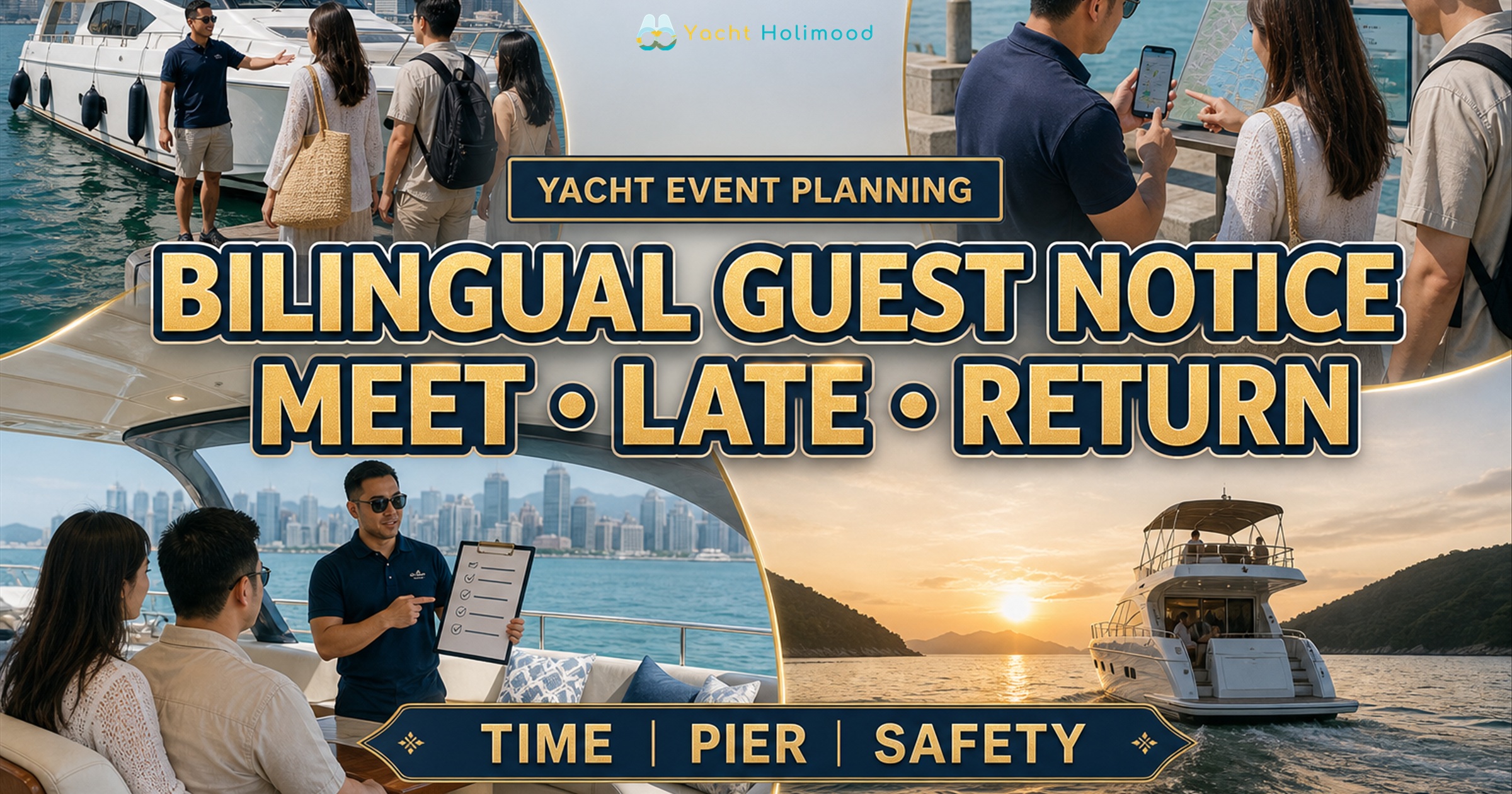
A yacht event combines a meeting pier, passenger list, weather, catering, swimwear and return transport. When these details are scattered across a group chat, guests may act on an old location or miss a cut-off. Keep one bilingual source file, split it into three short messages and appoint one coordinator to issue updates.
Build a three-stage message schedule
Stage one: confirm the event outline
After booking, send the date, activity window, broad meeting area, expected programme, clothing direction and the details guests must return. If the berth or timetable is not final, label it “to be confirmed” instead of inserting an assumed location. Collect only necessary items such as guest name, mobile number, dietary requirement, water-activity participation and emergency contact.
Stage two: update two or three days before departure
Confirm the pier in Chinese and English, map pin, nearest transport point, meeting and sailing time, return estimate, weather and packing list. If catering, photography or water toys are included, state when those services begin and where guests may wait. Use the yacht guest-count change procedure so the invitation and operator list do not diverge.
Stage three: keep the day-of message actionable
The final message should fit on one phone screen: map, meeting time, coordinator, last boarding time, late-arrival action, weather status and return point. Pin only the newest version. Put detailed policies in the earlier message so the day-of note stays scannable.
What must a complete guest notice contain?
| Field | Traditional Chinese | English | Verify before sending |
|---|---|---|---|
| Time | State Hong Kong Time; separate meeting and sailing | Use Hong Kong Time and 24-hour clock | Date, weekday and total duration |
| Place | Chinese pier name, exit or berth | Official English place name | Map pin and operator direction |
| Contact | One coordinator and mobile number | Coordinator and mobile number | Who monitors replies on the day |
| Late arrival | Cut-off and no-guarantee wording | Cut-off and no-guarantee wording | Timetable, berth and operator decision |
| Preparation | Footwear, swimwear, sun protection | Footwear, swimwear, sun protection | Activity format and product restrictions |
A map pin does not replace a written location. State the pier, exit, berth or visible meeting marker. Use the official or operator-confirmed English place name rather than an improvised translation. Put “Hong Kong Time” beside all times; 18:30 is clearer than an isolated 6:30.
Give safety information without inventing promises
Remind guests to wear non-slip footwear, use lifejackets as instructed, supervise children, keep luggage out of walkways and follow the master and crew. Check the Hong Kong Observatory current weather. However, sailing, route changes and rescheduling follow confirmed product terms and operator decisions. The Marine Department pleasure-vessel information and operator guide reinforce the operational role of the master and crew; a guest message never replaces on-board instructions.
Copy-ready Traditional Chinese and English templates
Traditional Chinese short version:「活動日期:__;集合時間:__(香港時間);集合地點:__;地圖:__;聯絡人:__。請於__前到達,逾時未必能等候。請穿防滑鞋並按個人需要帶備防曬、暈浪用品及更換衣物。當日安排、天氣及路線以 Yacht Holimood、船方與船員最新確認為準。」
English short version: “Date: __; Meeting time: __ (Hong Kong Time); Meeting point: __; Map: __; Coordinator: __. Please arrive by __. The vessel may be unable to wait after the cut-off. Wear non-slip footwear and bring personal sun protection, motion-sickness items and a change of clothes. The latest Yacht Holimood, operator and crew confirmation governs weather, route and on-board arrangements.”
Keep the same field order in both versions and update them together. Never change the pier in Chinese while leaving the old location in English. A calendar invitation may convert time zones separately, but the group message should retain Hong Kong Time as the single operational reference.
Three common misconceptions
- A map pin is enough. It may point to the opposite end of a pier; add an exit, berth or landmark.
- The boat can wait for every late guest. Berth, schedule and other guests may limit waiting, so use only the verified cut-off.
- English is a word-for-word translation. Time, official place names, phone format and cut-off wording must be immediately actionable.
Handle late, unreachable and redirected guests
- Appoint one shore-side coordinator instead of directing every message to the on-board organiser;
- take attendance 15 to 30 minutes before the meeting time and use one recognised number;
- after the published cut-off, follow the operator’s decision and never promise a return to the pier;
- for a location change, send four lines: new place, reason, effective time and “old pin void”;
- after boarding, update the group so shore-side contacts know the attendance status.
Manage caterer, photographer and decoration arrivals with the yacht vendor handover. Use the yacht activity group timetable for swimming, photos, rest and meals. The guest version should contain only actions they need and should not expose unnecessary personal data or internal prices.
Match the notice to a Yacht Holimood option
Departure point, duration, interior space, catering and water activities vary by yacht. Yacht Holimood helps guests compare options, while the latest product page and operator confirmation govern berth, timetable, route, price, surcharge, headcount deadline and bad-weather terms.
- Eight-hour daytime cruise: explain water-activity items, wet/dry clothing and the return regrouping point.
- Evening Victoria Harbour option: label evening times, night return and photo meeting points clearly.
- Sai Kung daytime yacht activity: separate pier, catering, water-toy and subgroup information.
FAQ
When should the first guest notice be sent?
Send the event outline after booking. Mark the berth as pending if needed and send final details two or three days before departure.
Must the English message use AM or PM?
A 24-hour clock plus “Hong Kong Time” is clearest. Add morning or evening if guests mainly use a 12-hour clock.
How long will a yacht wait for a late guest?
There is no universal allowance. Use the cut-off confirmed for the berth, timetable and operator; do not promise waiting.
Does bad weather automatically cancel the event?
Not necessarily. Check official weather and follow the product terms, Yacht Holimood and operator notice.
Should every guest’s phone number appear in the group?
No. Collect and share only what the activity needs. One coordinator can securely hold the working list.
This post is also available in:
 繁體中文
繁體中文  简体中文
简体中文

