
Quick Answer
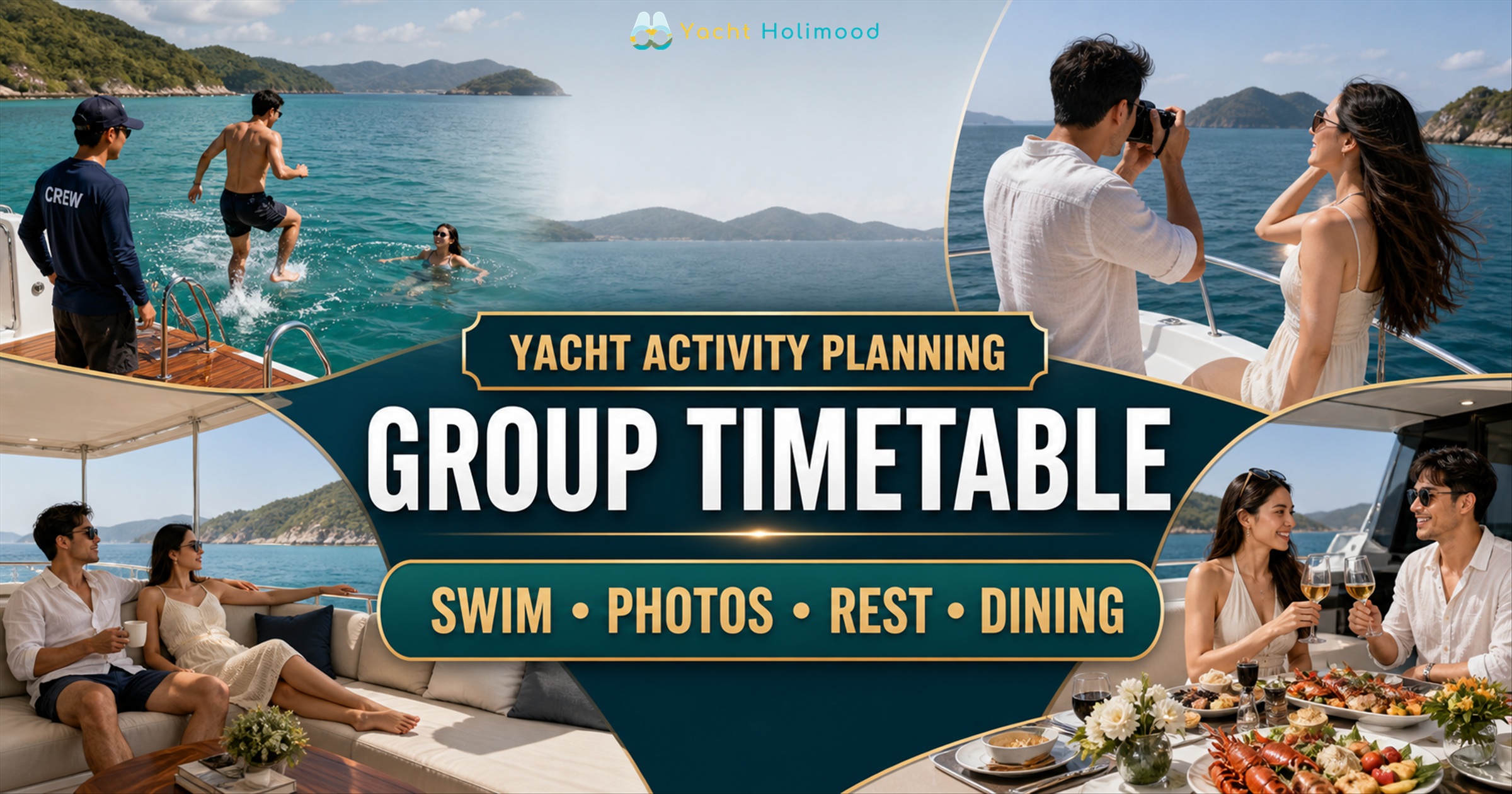
Do not start swimming, photography, rest and dining at the same time. Divide guests into a water group, dry photography group, rest group and catering coordination group, then stagger use of the boarding ladder, main deck photo position, seating and dining table. Keep a ten-minute transition for headcount, drying the route, collecting equipment and clearing walkways. Crew instructions, weather and the actual yacht layout always take priority.
On a yacht event for twenty to forty guests, the usual problem is not a lack of activities but overlapping movement. Swimmers return through the ladder while photographers occupy the same route, drinks move across a wet deck, and lunch starts before equipment is cleared. A useful timetable therefore records zones, groups, accountable leads and transition conditions—not only the meal time.
Map wet zones, dry zones and clear routes
Ask the supplier to identify the boarding ladder, life-saving equipment, toilets, indoor seats, dining area and crew working zones. The route from the ladder to the deck is a wet zone for boarding, headcount and basic rinsing. Food, camera equipment and dry personal items stay in dry zones. Do not use stairs, helm areas, life-saving equipment or crew routes as long photo positions or bag storage.
The event lead should confirm usable areas with the crew and give a three-minute briefing. The Hong Kong Marine Department provides general pleasure-vessel information, while the captain and crew decide the actual onboard arrangement. Check the Hong Kong Observatory before departure, but wait for the supplier’s operational decision.
Four groups keep one priority route clear
| Group | Main role | Avoid |
|---|---|---|
| Water group | Wear required equipment, board in roster order and complete return headcount | Putting on equipment or using phones at the ladder |
| Dry photography group | Use approved deck positions and timed photo turns | Blocking routes, climbing or interfering with crew operations |
| Rest group | Hydrate, reapply sun protection and use the quiet seats | Leaving wet gear on seats or occupying food worktops |
| Catering coordination | Confirm serving time, dietary needs, table and waste flow | Moving hot food or glassware during peak boarding |
Each group needs only one lead for roster, timing and transition notices. That lead does not replace crew safety decisions. Guests may rotate after the roster is updated; otherwise a swimmer can be incorrectly recorded as having moved to photography.
Report three numbers, not only total attendance
Give the supplier total guests, guests entering the water and guests remaining onboard. Also note children, older guests, motion-sickness concerns or boarding assistance without exposing unnecessary personal information. These numbers support equipment, rotation, rest-zone and catering planning.
Example six-hour group timetable
| Time | Water | Photos / rest | Catering / transition |
|---|---|---|---|
| 11:00–11:30 | No entry; safety briefing | Learn approved photo and dry zones | Headcount, storage and lunch confirmation |
| 11:30–12:20 | Group A rotation | Group B photos; Group C rests | Preparation away from the ladder |
| 12:20–12:30 | Everyone returns and is counted | Clear the main photo position | Dry, collect and transition |
| 12:30–13:20 | Pause main water activity | Staggered dining and rest | Main service and collection |
| 13:20–14:10 | Group B rotation | Group A rests; Group C photos | Keep a hydration zone available |
| 14:10–15:00 | Weather-dependent final rotation | Group photo and free rest | Allow equipment, changing and return buffer |
This is a planning template, not a fixed product promise. Every segment has start and finish conditions: crew approval, confirmed roster, equipment ready, all swimmers counted back onboard, and the route cleared. Shorten or cancel water and photo activities when conditions change.
Use ten minutes for four transition checks
- Count people: the water lead checks every name, rather than judging by sight.
- Collect items: move safety gear, phones, dry bags and cameras away from routes.
- Dry the route: address the ladder and main walking line first.
- Open the next segment: dining, photography or another water rotation starts after crew and event-lead confirmation.
For food storage, hot food and allergy information, consult the Centre for Food Safety and the actual caterer. Keep alcohol clearly separate from water activity. Related reading: alcohol-free yacht party planning and guest-number change management.
Three common misconceptions
“A free-flow event is more relaxed”
Freedom still needs boundaries around shared routes. Staggering the ladder, photo point and meal service reduces stop-start announcements.
“A large yacht means no rotations”
Passenger capacity does not mean every toy, ladder, toilet, table and photo point can serve everyone simultaneously.
“A few extra photo minutes will not matter”
One overrun reduces headcount, equipment and return buffers. Give each group a photo limit and reserve one final group-photo window.
Match the timetable to Yacht Holimood options
Use the Hong Kong yacht route and water-activity guide, then compare guest numbers, pier, water participation, dining and rest needs. Live availability, prices, facilities, capacity and terms remain subject to the product page and written confirmation.
- Eight-hour daytime yacht package
- Victoria Harbour evening and dining option
- Sai Kung yacht, water toys and lunch option
Send one activity sheet with your enquiry
Prepare date, duration, pier, total guests, water participants, dining needs and proposed rotations before contacting Yacht Holimood. The supplier can then check the plan against the actual yacht layout.
FAQ
Must everyone stay in one fixed group?
No. Keep a clear roster for each water-activity rotation, with an accountable group lead and a known onboard group. Guests may change groups after a recorded handover.
Where should non-swimmers who want photos stay?
Use an approved dry photography or rest zone, away from the boarding ladder, safety equipment and catering route.
Can swimming and the main meal happen together?
Avoid overlapping peak boarding activity with main food service. Wet walkways, headcounts and hot food create conflicting movements.
Can the yacht return for a late guest?
Do not promise this. Meeting and late-arrival rules depend on the booking, pier and written supplier confirmation.
Does the timetable continue when weather deteriorates?
No. Crew instructions, safety requirements and the supplier weather decision override the timetable.
Holimood Newsletter
Subscribe for practical Hong Kong yacht, outdoor activity and booking-planning guides.
This post is also available in:
 繁體中文
繁體中文  简体中文
简体中文

