
Quick Answer
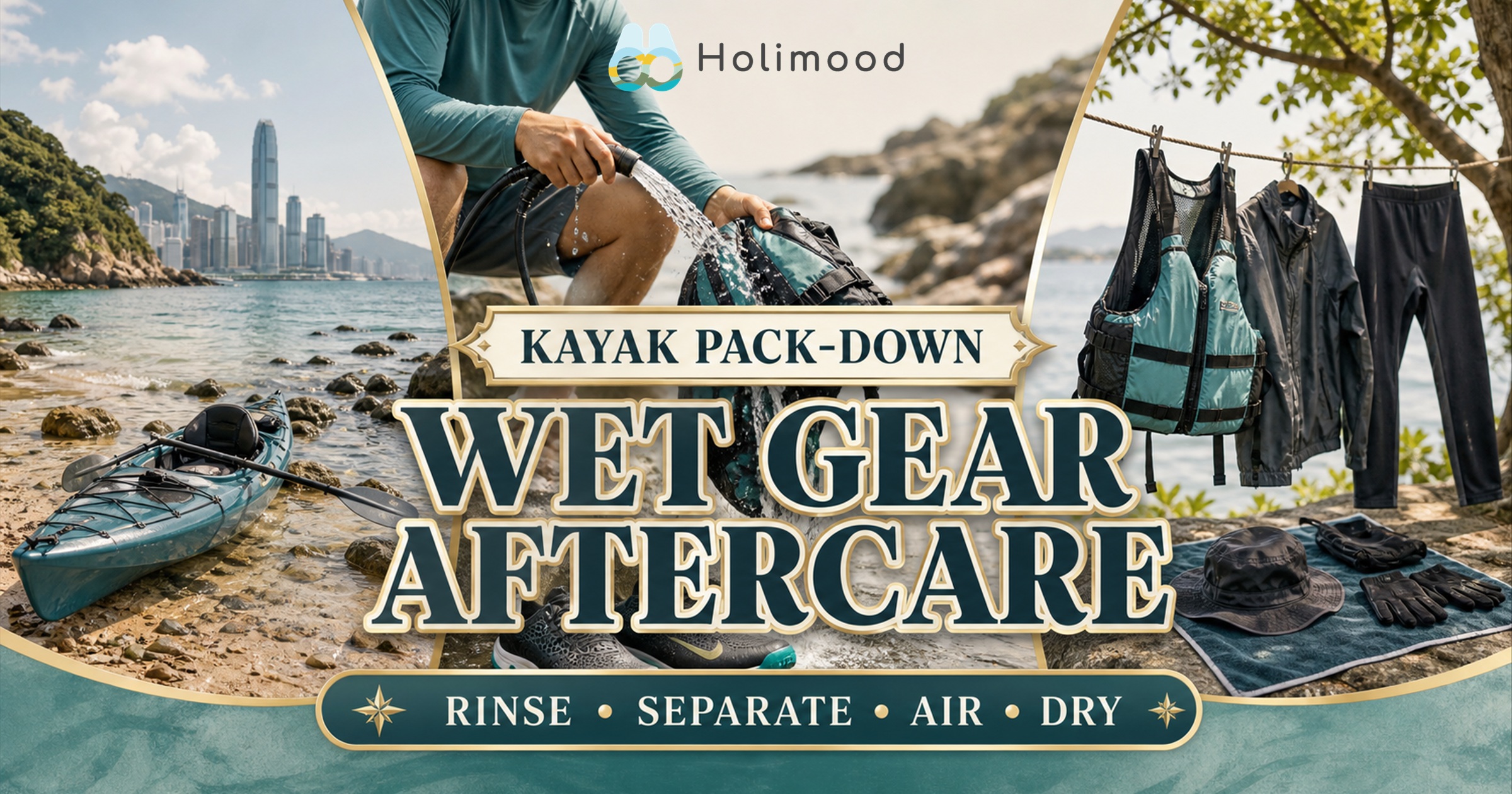
After summer kayaking, rinse salt and sand off with fresh water, let equipment drain briefly, separate dripping items from sandy footwear and clean valuables, ventilate safely during the journey, then unpack everything immediately at home. Mildew prevention is mainly about shortening the time gear stays warm, wet and sealed—not masking odour with more products.
The hour after landing matters. A wet PFD, sandy shoes and towels sealed together in Hong Kong summer heat can reach home with salt marks, trapped water and a stale smell. This guide turns pack-down into a repeatable sequence. If you are still choosing a location or rental, first review the Hong Kong kayak and SUP rental guide and include clean-up time in the itinerary.
What order should you follow?
- Count: Check PFDs, footwear, towels, dry bags, phone pouches, keys and rented accessories before leaving.
- Rinse: Use fresh water on visible salt, sand, mud and sweat, especially around zips, buckles, straps and shoe tread.
- Drain and separate: Keep dripping textiles, sandy footwear and cleaner small items in separate washable inner bags.
- Unpack: Empty every bag on arrival, open fasteners, remove insoles and spread items apart to dry.
| Gear | At the venue | In transit | At home |
|---|---|---|---|
| PFD | Gently rinse the shell, straps and buckles | Keep upright without heavy items on top | Open all fasteners and air both sides in shade |
| Water shoes | Remove sand from tread and take out insoles | Separate from clothing; keep the opening upright | Rinse inside and out; dry insoles separately |
| Dry bag or phone pouch | Wipe sand from the outside first | Separate wet and clean compartments | Empty the base and hold the mouth open |
| Swimwear and towels | Squeeze out excess fresh water | Use a washable inner bag | Wash by the care label and keep apart while damp |
Why rinse before travelling home?
Salt remains after seawater evaporates, while fine sand works into zips, webbing and shoe tread. A gentle fresh-water rinse reduces what enters the bag, vehicle and home. Avoid close-range pressure washing, bleach, strong detergent, fragrance spray or fabric softener unless the care label allows it. A stronger smell does not prove that equipment is clean or dry.
Let gear drain for a few minutes without blocking a public walkway. If the venue has no rinse point, blot surface water with a clean towel, separate items and shorten the journey, then rinse immediately at home.
How do you separate wet gear without soaking the vehicle?
Use three zones: dripping PFDs and clothing, sandy footwear, and clean valuables. Do not overfill bags. A washable absorbent liner can control drips, and containers should remain upright and secured. On public transport, wipe the outside and contain all drips.
In a private car, use climate control or safe ventilation without blocking windows, doors, footwells or seat belts. Do not open loose containers while driving. Transit ventilation only reduces trapped moisture; it never replaces unpacking and complete drying.
When is gear dry enough to store?
Empty every bag. Open PFD buckles and straps, remove shoe insoles, open dry-bag mouths and wipe seams. Space items apart with indoor airflow. Before using an exposed balcony during unsettled weather, check the Hong Kong Observatory’s precautions and keep equipment secure.
Touch padded areas, shoe toes, bag bases and folds. A cool damp feel or stale smell means the item needs more time. Follow the maker’s or rental operator’s instructions, and avoid long-term heat, direct sun, crushing or folding while damp.
Three misconceptions about mildew prevention
A sealed bag keeps everything safe
It controls drips briefly but also traps humidity. Separate during transit and empty it on arrival.
More direct sun is always better
Heat and UV tolerance varies by material. Shade, airflow, turning and sufficient time are safer defaults subject to the care label.
No smell means completely dry
Foam, shoe toes and folded seams may retain water. Check touch, folds, seams and odour together.
How should aftercare affect your booking choice?
Rinsing, changing, temporary drainage and storage arrangements affect the return journey. Holimood activity pages let travellers compare locations, times, included equipment and operator terms. Options include Hoi Ha Wan single or double kayak and SUP rental, Sai Ha Road kayak and SUP rental, and a private Sai Kung SUP lesson with an instructor. Facilities, opening times, weather arrangements, return standards and availability should be confirmed on the booking page or with the operator.
Before paying, ask whether fresh-water rinsing is available, where wet gear may drain, how rented items must be returned, and what happens in adverse weather. These answers reduce last-minute support questions and make the pack-down realistic.
Pack-down checklist
Bring three washable inner bags, an absorbent liner and dry clothes. After landing, count, rinse, drain and separate; at home, unpack, open and dry completely. Compare verified activity pages and current terms before choosing a venue.
Frequently Asked Questions
Can wet gear wait until the next day?
It is better to rinse off salt and sand promptly and unpack everything as soon as you arrive home. Do not leave a sealed wet bag in a vehicle or hallway overnight.
Can a PFD go in a washing machine or dryer?
Usually not unless the maker explicitly permits it. Follow the care label, rinse gently with fresh water and air-dry in a shaded, ventilated place.
Should water shoes and dry bags share one bag?
They can be transported together briefly, but sandy shoes, dripping clothing and cleaner electronics pouches should be separated with washable inner bags.
Is direct sun the quickest way to prevent mildew?
Airflow and complete drying matter more. Strong heat and UV may age coatings, rubber or adhesives, so follow each product's care label.
Do I need to wash rented equipment myself?
Follow the operator's return instructions and do not apply unknown cleaners. Confirm rinsing, changing, storage and return arrangements before the activity.
Newsletter
Subscribe to the Holimood Newsletter for Hong Kong water-activity planning, seasonal updates, equipment lists and new experiences.
This post is also available in:
 繁體中文
繁體中文  简体中文
简体中文

