
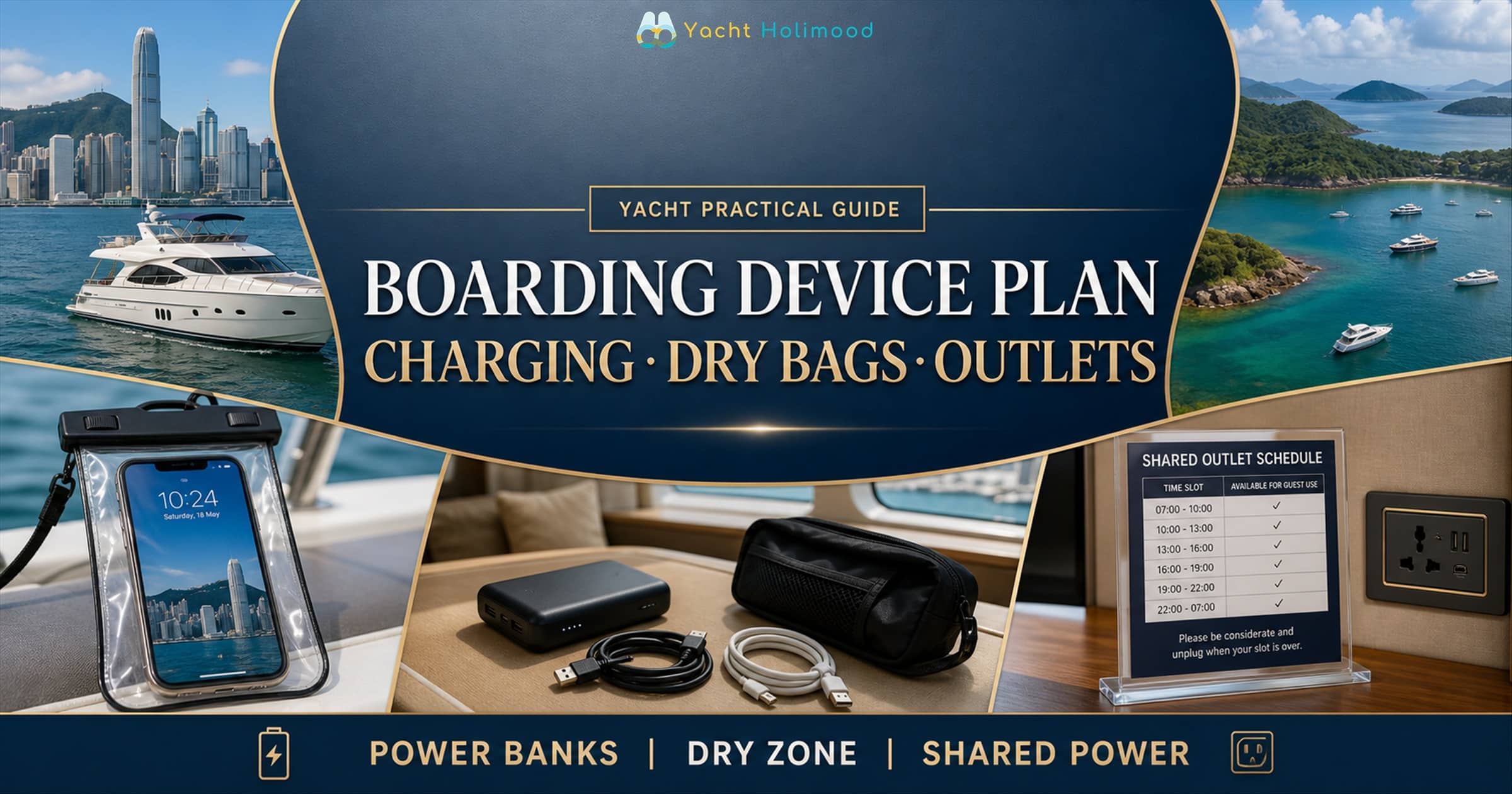
A yacht group may carry phones, action cameras, speakers, lighting, tablets and spare batteries. The problem is rarely a simple shortage of power. Guests often arrive with several adaptors for one outlet, place drinks and wet clothing beside cables, seal a warm power bank inside a waterproof pouch, or repeatedly take phones to the rail for photos. A short device plan reduces these conflicts.
Sort devices into three groups before boarding
Essential devices cover contact, payment, tickets, emergency information and assigned photography. Waterproof backup devices remain charged and stored in a dry zone. Leave ashore items include laptops without a clear purpose, duplicate chargers, unknown batteries and unfamiliar equipment. Label shared devices with an owner or team.
Make a device-purpose-owner list
- Device, quantity and responsible person;
- whether it needs vessel power or runs on its own charge;
- water protection and dry storage location;
- planned use or filming time;
- who informs crew after heat, water ingress or damage.
Coordinate this list with the yacht vendor handover and guest-count plan. Photography, catering, audio equipment and guest phones compete for tables and walkways; unplanned cables can become trip and splash hazards.
Inspect power banks, chargers and cables
Bring products with clear manufacturer and capacity markings. Leave behind anything swollen, distorted, cracked, corroded, exposing conductors or seriously water-damaged. EMSD charger guidance says charging should not run too long or unattended, chargers should stay away from damp areas, and abnormal heat, smell or sound requires immediate disconnection.
Keep charging visible, ventilated and dry
Do not cover a charging device with clothing, seal a warm power bank in a waterproof pouch or leave it in direct sun. Disconnect it after charging and coil cables away from walkways. If a device enters seawater, do not switch it on, connect power or dismantle it while wet. Follow crew instructions for temporary isolation and professional manufacturer or repair guidance ashore.
Do not assume every USB port is equivalent
USB-A, USB-C, fast-charging protocols, voltage and wattage differ. Use compatible, reputable chargers and cables instead of stacked adaptors. The operator must confirm the vessel’s actual supply; a familiar connector shape is not proof that the output suits every device.
A waterproof pouch is not universal protection
Test the seal at home with dry tissue. Check clips, zips, lanyards and transparent windows. Dry hands before opening it, and keep sand, hair and cables out of the seal. A lanyard must not entangle a rail, PFD or another guest. Whether it can be worn in the water depends on operator and activity rules. Return phones to the assigned dry zone after use rather than leaving them near the deck edge.
| Item | Before departure | On-board location | Stop-use trigger |
|---|---|---|---|
| Phone | Charge and save operator details offline | Dry pouch or interior dry zone | Water ingress, overheating or case damage |
| Power bank | Check case, contacts and markings | Cool, ventilated, supervised area | Swelling, smell, unusual heat or noise |
| Action camera | Test housing and tether | Issue only for planned filming | Seal or mount failure |
| Shared speaker/light | Name one operator | Away from water, food and walkways | Damaged cable, trip or crew instruction |
Allocate shared outlets by time and priority
Ask the operator whether guest outlets exist, where they are, voltage, total load, whether supply remains available underway and what devices are prohibited. The Marine Department Pleasure Vessel Operator guide explains that circuit protection covers the fixed installation according to total circuit load; repeated tripping can indicate excessive load. Guests must never reset or alter distribution equipment.
Use a schedule instead of first come, first served
- Confirm a dry charging area with crew after boarding;
- prioritise emergency contact and assigned work devices;
- record each device and owner for every slot;
- disconnect completed or idle chargers and keep liquids away;
- if there is tripping, smell, smoke or unusual heat, stop touching equipment and alert crew.
Check the Hong Kong Observatory current weather. Thunderstorms, strong wind or rain change deck use and the availability of dry areas. The device plan never overrides the master, crew or official warnings.
Three common misconceptions
- An extension board creates unlimited sockets. Total load and any extension must be approved.
- Charging inside a waterproof pouch is safer. A sealed pouch can trap heat; charging needs dry ventilation and supervision.
- A power bank is fine if it still turns on. Swelling, damage, odour or water ingress are stop-use signs.
Match electronics needs to a Yacht Holimood option
Outlets, indoor areas, itinerary, catering and water activities vary by yacht. Yacht Holimood pages help compare route, duration, facilities and activity format, but live availability, power supply, permitted devices, pricing, surcharges and bad-weather terms must be confirmed with the current product page and operator.
- Eight-hour daytime cruise: water activities make phone handover, waterproofing and a dry zone especially important.
- Evening Victoria Harbour option: concentrated photography and lighting needs benefit from assigned charging windows.
- Sai Kung daytime activity: separate electronics from catering, wet gear and water-toy circulation.
Use the Hong Kong yacht route and rental guide while selecting a vessel, then send headcount, filming, audio and charging requirements together for verification.
FAQ
Does every guest need a power bank?
No. Plan around trip length, filming and communication. Do not rely on vessel outlets as the only source.
Can a power bank charge inside a waterproof pouch?
A warm device should not be sealed while charging. Use a dry, ventilated, supervised location and follow manufacturer and crew instructions.
Can a seawater-wet phone be tested on a charger?
No. Stop using it, do not power or dismantle it, isolate it as directed and seek professional guidance ashore.
May guests bring an extension board?
Only if the operator confirms it. Do not use or chain extensions when voltage, load and protection are unknown.
What if an outlet trips?
Disconnect use, keep the area dry and notify crew. Guests should not reset distribution equipment or repeatedly reconnect devices.
This post is also available in:
 繁體中文
繁體中文  简体中文
简体中文

