
Quick Answer
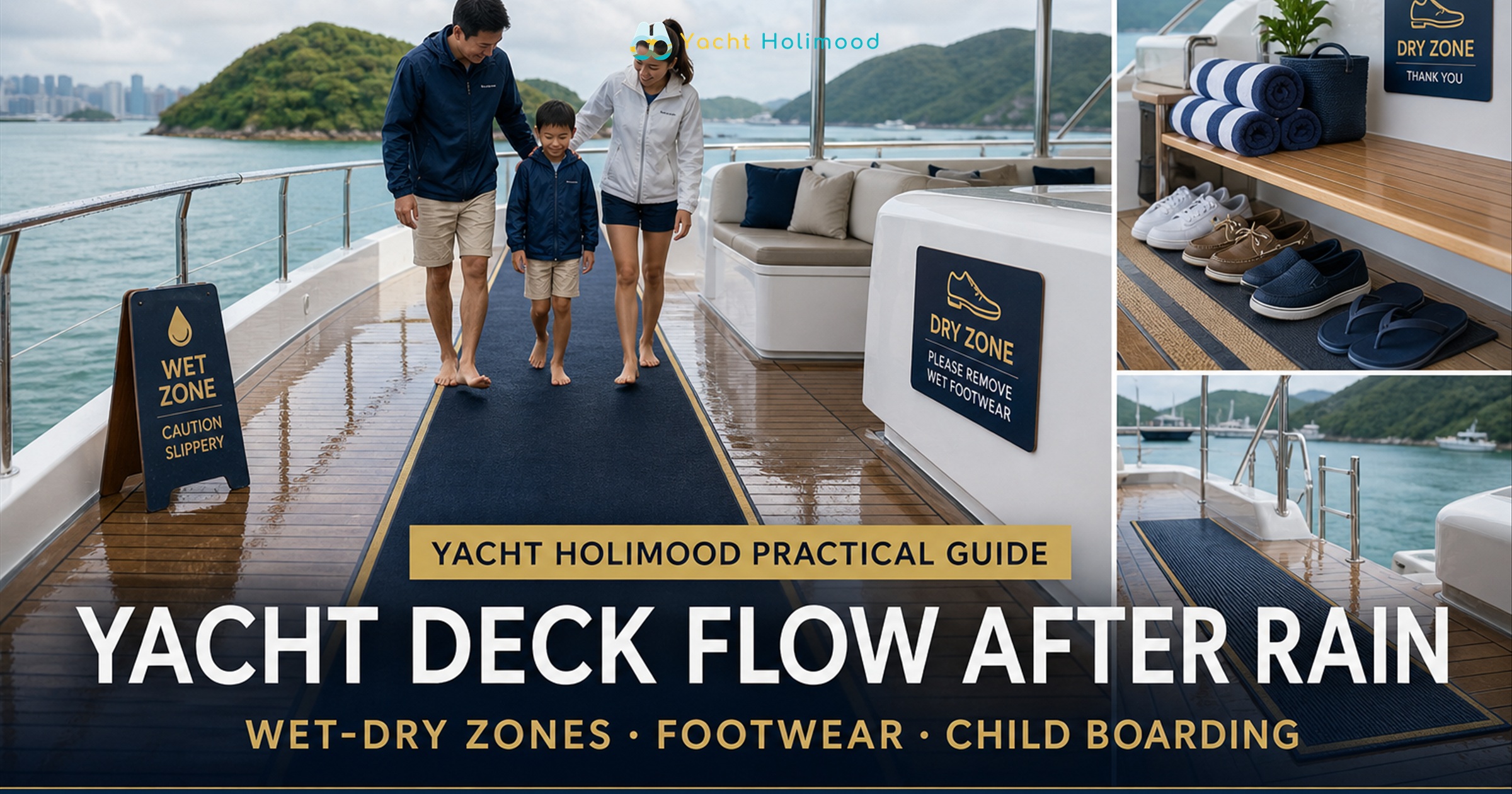
After rain, pause movement until the crew confirms conditions. Establish one dry main passage, one wet-item zone and one waiting zone. Move in small groups, assign one adult to each child, keep footwear and towels away from exits, and never cross ropes, equipment or slippery edges without crew direction.
A Hong Kong summer shower may pass quickly while the deck, stairs and pier connection remain slippery. This guide connects wet-dry zoning, child boarding, footwear storage and a practical Yacht Holimood booking brief. For route context, review the Hong Kong yacht route and water-activity guide.
What should happen first after the rain stops?
Stop before moving. Ask guests to stay in their present safe positions while the crew checks speed, motion, drainage, stairs, doors and the pier connection. A deck without visible puddles may still have a thin slippery film, and glare can hide it. Do not cover an entire route with towels or move safety equipment for photographs.
Once movement is permitted, identify one essential route between seating, washroom, cabin and boarding point. Separate photography, catering and baggage activity. If rain continues, visibility worsens or the crew asks everyone to remain inside, postpone movement; the timetable never overrides on-site judgement.
How should wet, dry and waiting zones work?
The dry zone holds footwear, bags, electronics and dry towels under cover without blocking an exit. The wet zone receives rainwear, damp towels and water-activity items in edged trays or waterproof bags. The waiting zone holds the next small group until the route is clear. All three locations must be approved by the crew.
Use baskets or verbal labels, but do not tape signs to decks or rails without permission. Adhesive may damage finishes or create a trip hazard. Recheck the route whenever speed, berth or activity area changes.
Rainy-deck flow comparison
| Situation | First action | Flow | Avoid |
|---|---|---|---|
| Brief shower | Crew checks drainage | Two to four guests at a time | Everyone rushing to photographs |
| After water activities | Wet items enter wet zone | Exit water, organise, move | Dripping gear through cabin |
| Meal service | Separate food and wet items | One person collects food | Hot dishes in passages |
| Disembarking | Count people, then bags | One direction at a time | Opposing flow on gangway |
How should children and slower guests move?
Assign one named adult to each child. The adult listens first, secures their own footing and then guides the child. Do not hold an umbrella and phone while pulling a child. Lifejackets, handholds and permitted areas follow crew instructions; a mat never replaces equipment or supervision.
Allow older or slower guests to start only after the route clears. Disclose any wheelchair, walking aid or extra-assistance need before booking, including folded dimensions and weight. If tide, steps or gangway angle are unsuitable after rain, change the pier, shorten the trip or wait.
How should footwear, towels and equipment be stored?
Pair footwear in an edged tray or individual bag with soles down. Mark ownership without sensitive personal data. Separate damp towels from electronics. Large floats, ropes and shared equipment remain under crew or supplier control and must not be left beside stairs.
Three mistakes are common: assuming bare feet cannot slip, covering drains or steps with towels, and handing every item to one organiser. A clearer system is one bag per person, one wet basket per group and owner-led checking at each transition.
How to brief Yacht Holimood
Provide the date, time, boarding district, adult and child numbers, mobility needs, water activities, catering, footwear policy and baggage volume. Ask Yacht Holimood to compare current options by actual vessel, indoor area, shade, boarding steps and activity needs. Use a daytime eight-hour option, Victoria Harbour evening option and Sai Kung daytime option only as starting points, not guarantees for a particular date.
Before payment, confirm the vessel, pier, meeting time, available spaces, weather arrangements, catering and water activities through the product page, booking terms and written reply. The organiser circulates the confirmed details; the skipper and crew retain authority to change movement, route and boarding sequence.
Concise CTA
Put headcount, children, mobility needs, activities, pier, wet-dry zones, footwear, catering and weather fallback on one page, then ask Yacht Holimood to match current options. Anything not confirmed in writing remains unconfirmed.
Copyable checklist
- Pause until the crew permits movement.
- Set one dry zone, wet zone, waiting zone and main route.
- Assign one adult per child; allow slower guests a clear route.
- Pair footwear, bag wet items and separate electronics.
- Stagger catering, photography, water exit and disembarking.
- Recheck flow after every berth or activity change.
- Count people before personal and shared items.
Frequently Asked Questions
How long after rain can the deck reopen?
There is no fixed number of minutes. The crew decides from drainage, motion, speed, surfaces and equipment; guests should not rely on the absence of puddles.
Are bare feet safer on a wet deck?
Not necessarily. Bare feet may still slip or be injured. Follow the vessel’s footwear and access instructions.
Can guests add their own anti-slip mats or tape?
Not without permission. Added items may damage finishes, block drainage or create another hazard.
Should children disembark first?
They may be prioritised only when the pier, gangway and receiving adult are ready. One adult should stabilise first and follow crew direction.
Does rain always cancel a yacht trip?
No, but it does not guarantee operation either. Thunderstorms, wind, visibility, sea state, the skipper’s decision and booking terms determine the outcome.
Sources and editorial note
Vessels, piers, facilities and weather arrangements can change. Use current product pages, booking terms and crew instructions.
Holimood Newsletter
Receive practical planning checklists for Hong Kong yachts, outdoor activities and group experiences.
This post is also available in:
 繁體中文
繁體中文  简体中文
简体中文

