
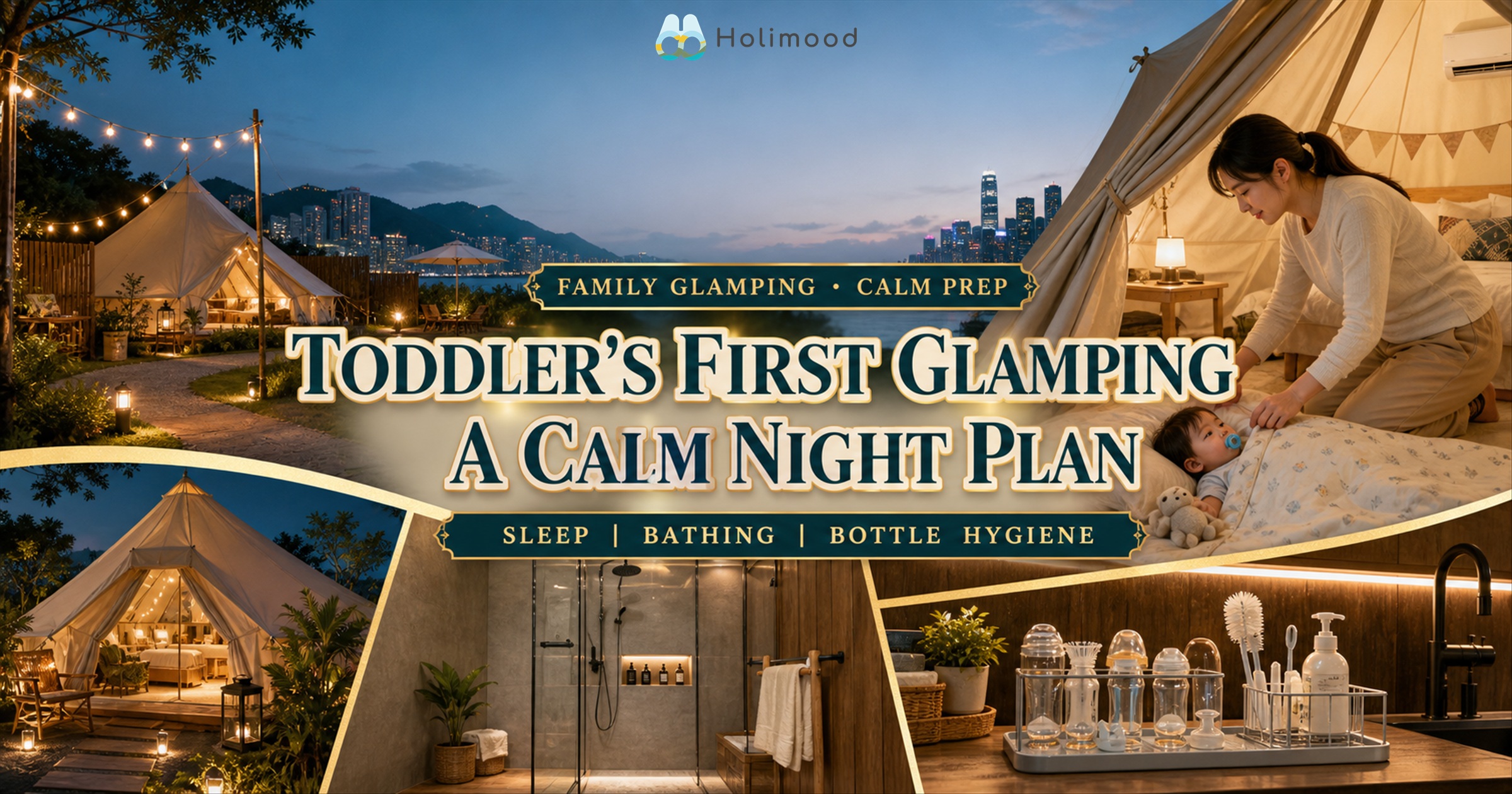
A Toddler’s First Glamping Trip: Sleep, Bathing, Bottle Hygiene and Night Lighting
Quick Answer
For a toddler’s first glamping night, choose accommodation with a controllable sleeping environment, easy bathroom access, a verified clean-water setup, straightforward transport and a clear bad-weather policy. Bring a familiar bedtime routine, separate clean and wet items, plan bottle washing and sterilisation before arrival, and use low-level lighting along the bathroom route. Keep the first itinerary light. If a child develops a fever, persistent vomiting, breathing difficulty or a marked change in alertness, end the trip and seek appropriate medical advice.
What should parents compare before booking?
The most useful luxury is a repeatable care routine. Confirm air conditioning or fan availability, bed type, fall hazards, bathroom distance, hot water, potable-water access, refrigerator or cleaning space, parking or transfer arrangements, and bad-weather terms. A listing described as “glamping” does not automatically include a private bathroom, cot, steriliser or child-safety equipment. Ask before payment when a required facility is not stated.
Plan backwards from the child’s normal routine
Write down nap, dinner, bath, feeding and bedtime windows, then add room for transport delays and adjustment to a new setting. On arrival, show the child the bed, bathroom, exit and caregiver’s position while it is still light. A calm first evening is usually more practical than combining a barbecue, stargazing and extended outdoor play.
How should sleep temperature and the bed area be arranged?
Do not rely only on the number shown on an air-conditioner. Check whether the child’s neck or back feels overly warm, clothes are damp, air is blowing directly at the bed, or the room feels stuffy. Use light, breathable layers that can be adjusted. Avoid overheating a closed tent with heavy bedding or heaters. For babies, follow the Hong Kong Department of Health’s safe-sleep guidance: place the baby on the back on a firm, appropriate surface and keep loose bedding, pillows and soft toys away from the sleep area.
Four checks for an unfamiliar bed
- No gap between the mattress and frame where a limb could become trapped.
- Cords, kettles, folding furniture and sharp corners are beyond reach.
- A caregiver can see the child and exit without switching on harsh overhead light.
- Doors, deck edges and steps remain clear during a night-time walk.
Bring only a familiar sleep item that is suitable for the child’s age and a familiar bedtime story. If the accommodation cannot provide an appropriate sleep surface, change the room type instead of improvising with a sofa, air bed or piled soft cushions.
How can bathing, changing and wet gear stay organised?
Inspect the floor, hot-water stability, door lock and the route between the room and bathroom. Lay out dry clothes, nappies, towel, toiletries and a waste bag before bringing the child into the wash area. Never leave a young child alone beside a bath, shower or water container. Check water temperature before use and keep kettles or cooking water completely out of reach.
Create clean, wet and waste zones
Keep clean clothes and bottles in a lidded container. Put wet towels and swimwear in a ventilated or leak-resistant bag. Seal used nappies and dispose of them according to site rules. This simple zoning prevents bottle brushes and clean clothes from touching footwear, soil or raw-food areas. For a shared bathroom, carry non-slip footwear, a light outer layer and a bag that leaves both hands free.
How should bottles and feeding equipment be cleaned at a campsite?
Before travel, confirm access to potable water, a handwashing sink, a clean work surface, power and an appropriate sterilisation method. The Department of Health’s bottle-feeding guide advises thorough cleaning and sterilisation of feeding equipment. Wash hands and the work surface, separate every bottle component, remove milk residue, brush inside and outside surfaces, rinse thoroughly, check for cracks and sterilise according to the item’s material and manufacturer’s directions.
Do not clean bottles in a sink at the same time as raw food, muddy footwear or barbecue equipment. Handle sterilised parts with clean tongs and keep them in a clean, covered container. Prepare formula according to the product label and official guidance rather than changing water-to-powder ratios. If the site cannot support a verifiable hygiene process, bring sufficient properly stored equipment or book a unit with a private indoor cleaning area.
What night lighting is helpful without disrupting sleep?
Use the main light for unpacking and a low, warm night light for the route from bed to bathroom or exit. The lamp should be stable, cool to touch and positioned so its cable does not cross a walkway. Carry a separate torch outdoors. An adult should lead and check deck levels, guy lines, wet surfaces and vehicle routes. The objective is not to light the whole campsite, but to identify thresholds, footwear, care supplies and companions safely.
Three misconceptions to avoid
- Glamping is the same as a hotel. Sound insulation, bathrooms, lighting and bedding vary widely.
- Colder air always improves sleep. Toddlers need comfort, not an extreme setting; observe the child and airflow.
- Packing everything removes the risk. Clean water, a safe sleep surface, a visible night route and an exit plan matter more.
One-night toddler glamping checklist
| Routine | Bring | Confirm before booking | Change or stop when |
|---|---|---|---|
| Sleep | Suitable sleepwear and familiar routine | Bed type, cooling, sockets and blackout | No safe surface, overheating or persistent distress |
| Bathing | Non-slip shoes, towel, dry clothes, nappies | Hot water, bathroom distance and flooring | Unstable water temperature or unsafe access |
| Feeding | Bottles, dedicated brush, detergent, covered box | Potable water, sink and sterilisation | Equipment cannot be cleaned or water is uncertain |
| Night | Low-level lamp, torch and spare power | Exit, bathroom route, decks and guy lines | Thunderstorm, strong wind or unsafe surface |
| Health | Usual medicines, thermometer, documents | Transport point and site contact | Fever, persistent vomiting, breathing trouble or reduced alertness |
Check the AFCD camper guidance and the Hong Kong Observatory nine-day forecast before departure. Review the checklist the night before and again before leaving home. Medicines, documents, feeding equipment and spare clothing should stay accessible rather than at the bottom of a large bag.
Which Holimood stays may fit a toddler’s first night?
Families can start with fixed accommodation that offers a defined sleeping area, cooling, a private bathroom or a shorter walking route. Compare the three-person Ma Wan hillside cabin, Lakeside Valley luxury cabin and Lung Home family camper options. Availability, prices, bed layouts, age rules and facilities vary by date and unit; use the current booking page and supplier confirmation.
To reduce follow-up messages, send the date, number of adults and toddlers, the child’s age, transport mode, private-bathroom requirement and essential feeding or sleep facilities in one enquiry. For more context, read Holimood’s Hong Kong glamping comparison and campground guide.
Compare the sleep space, bathroom, clean-water setup, transport and amendment terms before choosing the closest match to your normal care routine.
Frequently Asked Questions
How many nights are suitable for a toddler’s first glamping trip?
One night is a practical starting point for many families because it limits packing and lets caregivers observe how the child adapts.
Must the accommodation have air conditioning?
Not always, but in Hong Kong’s hot and humid season, a controllable fixed unit often makes sleep planning easier. Avoid direct cold airflow and extreme settings.
What if the campsite has no steriliser?
Prepare an alternative that follows feeding needs and manufacturer directions. If thorough cleaning and sterilisation cannot be assured, bring enough sealed equipment or change accommodation.
Can a toddler walk to the bathroom alone with a night light?
No. Outdoor levels, guy lines and vehicle areas are harder to identify at night, so an adult should accompany the child.
Is a tent safe during a thunderstorm?
Follow official warnings and site instructions. A tent is not a safe refuge for every severe-weather condition, and an early exit may be necessary.
Conclusion: bring a familiar care routine into a new setting
The measure of a successful toddler glamping night is not the number of activities completed. It is safe sleep, hygienic feeding, a manageable bath, and caregivers who know when to adjust or leave. Verify facilities before booking, learn the route while it is light and keep the evening simple. Subscribe to the Holimood Newsletter for more Hong Kong family-stay, camping and seasonal planning guides.
This post is also available in:
 繁體中文
繁體中文  简体中文
简体中文

