
Quick Answer
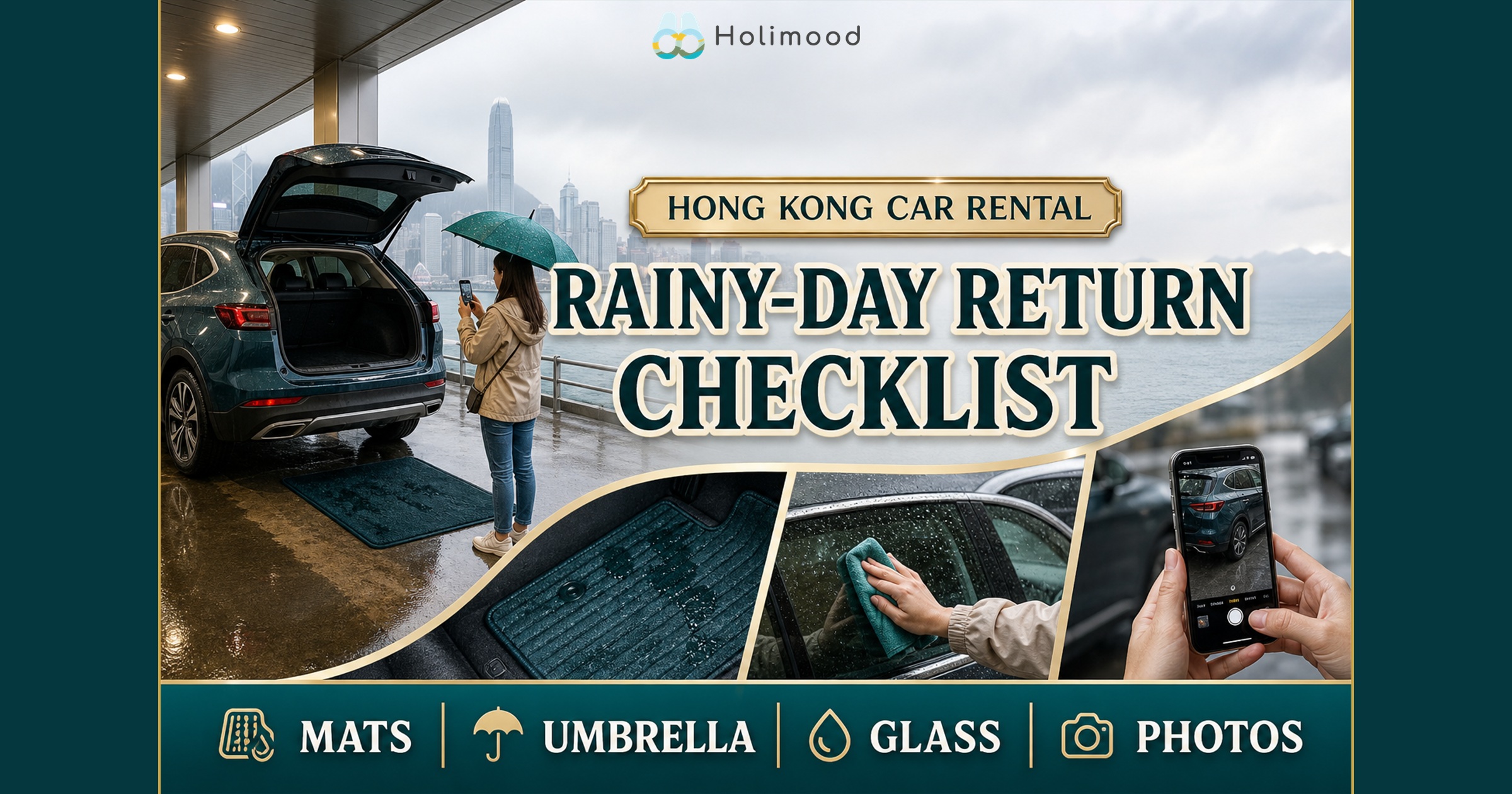
For a rainy-day rental-car return, protect visibility first, then separate water sources. Bag wet umbrellas, document damp mats and door sills by zone, keep glass and mirrors clear, and photograph the exterior, glass, tyres, cabin, dashboard, fuel and mileage in a fixed order. Stop DIY cleaning and report suspected leaks, flooding, warning lights, odours or equipment faults under the rental company’s written instructions.
Rain complicates both vehicle condition and evidence. Water may come from shoes and umbrellas, while condensation, a door-seal leak or flooding is a different issue. Rushing to wipe everything at the handover can erase the sequence without proving what happened. This checklist focuses on moisture control, safe visibility, photographs and a concise Holimood booking brief. First-time renters can also read the Holimood Hong Kong car-rental guide.
What comes first at a rainy return: safety or cleaning?
Stop only at the rental company’s designated, legal and safe handover point. Secure the vehicle and plan a safe exit before unloading. Never stand in a live lane, on a slope or beside deep water to photograph the body. During red or black rainstorm conditions, serious flooding or poor visibility, contact the rental company early about delay, relocation or recovery. Do not assume overtime charges are automatically waived.
Hong Kong’s Transport Department warns that wet roads reduce grip and visibility. Slow down, increase following distance and keep windscreens, windows, mirrors and lamps clear on the final drive. Safe arrival takes priority over a punctual but risky handover.
How should wet umbrellas, mats and luggage be separated?
Carry two leakproof bags, an absorbent cloth and one dry-item zone. Bag umbrellas under cover with tips down, away from electronics, documents and seats. Inspect the front, rear and boot separately. Surface moisture brought in by shoes is different from persistent water at a door seal, roof, vent, fixed carpet or under-floor area.
Photograph removable mats in place before lifting them, and do so only as permitted. Blot surface water; do not dismantle trim, use strong chemicals, pour water over the area or apply uncontrolled heat. Preserve and report persistent dampness, mould odour, electrical faults or suspected floodwater.
What should you do about condensation and water marks?
While driving, use the vehicle’s own demister, ventilation, air-conditioning and wipers. Learn the controls while stopped. Clean glass, cameras, mirrors and lamps only with permitted materials. Distinguish condensation, water drops, oily film, grit and scratches; dry-rubbing grit can create marks. Photograph any concern before necessary cleaning.
The Transport Department advises keeping windscreens, windows, lamps and wipers serviceable. Do not continue driving with poor visibility just to preserve evidence. If a dashboard warning appears, stop safely, record it and contact support.
What is a useful rainy-day photo order?
Start with time, location and registration plate. Photograph four three-quarter angles, then each side, wheels, tyres, glass, lamps and known marks. Continue with seats, mats, door sills, boot and the umbrella bag. Finish with fuel or charge, mileage and dashboard warnings in the state required by the company.
Use both contextual wide shots and clear close-ups. If rain covers the body in droplets, state that the vehicle was photographed in rain and ask whether a covered-location follow-up is required. Video can demonstrate wipers, lamps and a cabin walk-through, but it should supplement fixed photographs and written acknowledgement.
Three common rainy return scenarios
| Scenario | First action | Evidence | Avoid |
|---|---|---|---|
| Light rain, surface-damp mat | Park safely, bag umbrella, blot by zone | Mat before and after | Hiding wet items under seats |
| Heavy rain, body covered in drops | Confirm a covered photo point | Angles, glass, tyres, time and place | Standing in traffic to wipe the car |
| Suspected leak or floodwater | Stop dismantling or driving; report | Water source, level, odour, warnings | Heat or chemicals that mask evidence |
Three common misconceptions
Rainwater is normal, so it never needs reporting
Surface water from shoes may be simple, but persistent dampness around fixed carpet, electrics, door seals or the boot should not be self-diagnosed. Report it promptly.
A dry cabin makes photos unnecessary
Cleaning and handover evidence are separate. Photograph the starting condition, follow the permitted method, then record completion together with messages, fuel or charge and acknowledgement.
Insurance makes water and cleaning terms irrelevant
Insurance, excess, interior staining, glass, tyres, flood use, recovery and loss-of-use can sit under different clauses. Read the Holimood guide to rental deposits and return checks, then rely on the current contract.
How can Holimood help compare a suitable rental?
Send dates, pickup and return points, registered drivers, passengers, luggage, wet-weather route, mileage and parking environment in one enquiry. Use the MPV rental, BMW daily or weekly rental and Mini Cooper S Countryman rental only as current comparison starting points. Recheck availability, driver eligibility, deposit, insurance excess, mileage, fuel, cleaning, glass, tyres, flooding, weather delay and handover terms.
A model name or photo does not promise an identical mat, cargo tray, demister control or boot. Ask in writing about unlisted features. Holimood provides comparison and booking entry points; current product and booking pages or customer support remain the source for availability, price and terms.
Concise CTA
Put dates, vehicle needs, wet-weather route, handover points, drivers, passengers, luggage and term questions in one message, then compare currently available Holimood options.
Copyable rainy return checklist
- Confirm a safe, legal handover point and severe-weather procedure.
- Separate wet umbrellas from electronics, documents and luggage.
- Photograph mats in place; check sills, fixed carpet and boot.
- Keep windscreen, windows, mirrors, cameras and lamps clear.
- Photograph angles, sides, wheels, glass, cabin and dashboard.
- Record fuel, charge, mileage, warnings, time and location.
- Report abnormalities without dismantling, heating or masking them.
- Obtain written handover acknowledgement or next steps.
Frequently Asked Questions
Must the body be completely dry before return?
There is no universal rule. Prioritise safety and visibility, follow the contract, and ask for a covered follow-up photo point when rain is heavy.
Does a damp mat prove flood damage?
No. Separate water carried in by shoes or umbrellas from persistent dampness at seals, fixed carpet, electrics or the boot. Report an unclear source.
Are photographs usable when the body has rain droplets?
Take contextual and close shots, note that they were made in rain, and supplement them under cover if requested.
Does severe rain automatically waive a late-return charge?
Do not assume so. Contact the rental company early and rely on the contract and written response for delay, relocation or recovery.
Sources and editorial note
- Transport Department: Rain, Fog and Wind
- Transport Department: Safety Checks
- Hong Kong Observatory rainstorm warnings
This checklist does not replace the rental contract, insurance terms, road-safety rules, mechanical diagnosis or company instructions.
Holimood Newsletter
Receive practical checklists for Hong Kong car rental, road trips, outdoor activities and local travel.
This post is also available in:
 繁體中文
繁體中文  简体中文
简体中文

