
Quick Answer
The best lost-item routine starts before boarding: label small belongings, give every person a zipped pouch, use one clearly defined storage zone, repeat a five-item check whenever the group changes area, and scan the yacht by zone before disembarking. The organiser manages the routine, while each guest remains responsible for valuables.
Yacht events move between the pier, cabin, deck, water-activity area and ground transport. Phones, keys, sunglasses, charging cases and small bags are most vulnerable during those transitions. This guide turns the problem into a practical group briefing without asking crew or customer service to track every personal item.
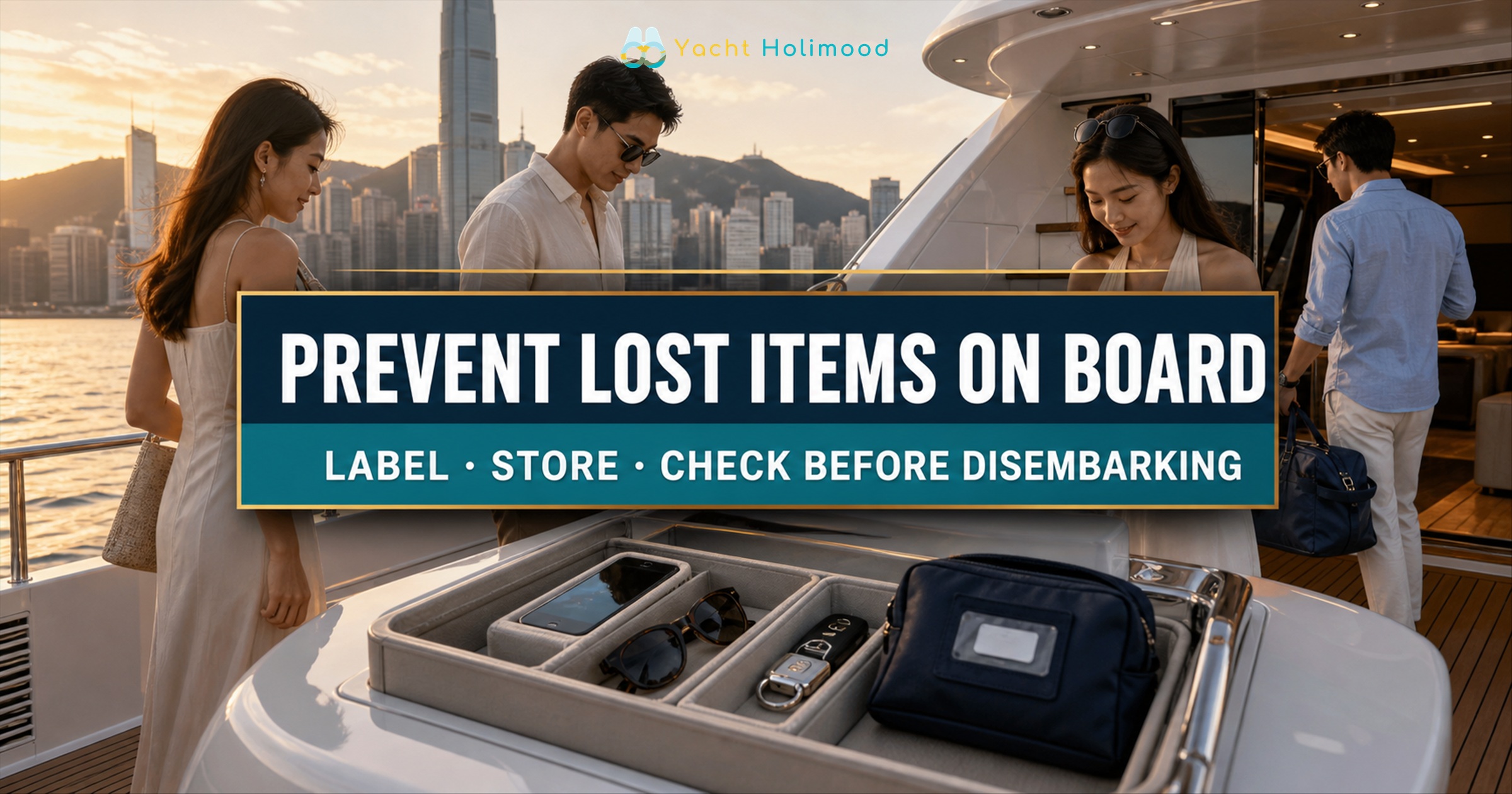
Label small items before departure
Place a name or contact note inside a phone case, glasses case, charging case and waterproof pouch. Name one owner for shared equipment. Do not expose a full home address, identity number or sensitive personal information. Ask guests to combine loose objects into one zipped pouch instead of carrying several small pieces by hand.
Create one central storage zone
Choose a covered location that does not block a passage and stays away from spray and heat. Use separate lidded compartments or pouches marked with initials. Keep wet gear, electronics, food and medication apart. A shared location is a process aid, not a transfer of responsibility to the organiser or crew.
| Item | Storage | Check point |
|---|---|---|
| Phone and wallet | Label inside; use a personal zipped pouch | Touch-check at every transition |
| Keys and glasses | Use a hard case or lidded section | Before leaving a seat and the yacht |
| Children’s items | Group by accompanying adult | At each use point |
| Shared equipment | Record borrower and quantity | Return item by item |
Use a five-item transition check
Losses often happen while moving: pier to yacht, cabin to deck, before entering the water, after returning onboard, when the yacht changes location, and at disembarkation. Use the same five prompts every time: phone, wallet, keys, glasses and bag. Empty pockets before water activities and return to the storage zone before covering gear with wet towels.
Assign reminders without centralising every valuable
For groups of ten or more, each owner checks personal items, each small group has one reminder person, and the organiser records only the storage location and completion of the final check. An accompanying adult manages children’s belongings. Give one named person responsibility for issuing and collecting shared equipment.
Use photos carefully
A photo of empty compartments and a shared-equipment list can help with the final comparison. Do not post close-ups of identity documents, phone screens or valuables in a public group. Record only practical features such as brand, colour and appearance. Photos support the routine; they do not replace individual confirmation.
Reserve ten minutes for a zone-by-zone sweep
Stop filming and charging first. Check cabin surfaces, seat gaps, washrooms, deck areas, storage compartments, water-activity zones, the gangway, pier waiting point and transfer vehicle. The organiser reads the five prompts and guests confirm personally. The final checker looks for remaining objects but should not casually remove an unclaimed item.
Charging points are a common trap. Keep cables, adapters and cases in the same labelled pouch and collect them immediately when charging ends. At night or in rain, use high-contrast labels and fixed lighting. Never cross a rail or enter the water to retrieve an object.
What to do when something is missing
Record the last known time and place, colour and distinguishing features, then contact the group and activity supplier with the booking details. Do not publish sensitive information. Recovery depends on circumstances, later schedules and whether the item entered the water; no supplier should promise success in advance. Refer to the Hong Kong Police official website if formal reporting information is needed.
Match the routine to a Yacht Holimood trip
Before booking, confirm the boarding pier, usable cabin space, covered areas, activity transitions and water-toy arrangements. Put the storage location, children’s-item owner and final-check time into the group briefing. Layout and movement vary by yacht, time and package, so rely on the product page and booking confirmation.
- Eight-hour daytime yacht package
- Victoria Harbour evening yacht option
- Sai Kung yacht day with water activities
Related guide: Hong Kong yacht routes and water activities.
Plan a smoother group yacht event
Prepare the headcount, activity sequence, belongings list and boarding arrangements before comparing yachts. A concise briefing helps guests manage their own items and keeps the event moving without unnecessary support requests.
Copyable checklist
- Label every small item inside.
- Give each guest one zipped pouch.
- Choose a storage zone that keeps passages clear.
- Repeat the five-item prompt at transitions.
- Empty pockets before water activities.
- Reserve ten minutes for the final sweep.
FAQ
Does a waterproof pouch prevent loss?
No. It can reduce water and scattering risk, but it must still be closed, labelled and kept by its owner.
Should the organiser collect every phone?
Usually not. Set a storage zone and reminders, while owners or their companions remain responsible for valuables.
How long should the final check take?
Allow about ten minutes, and begin earlier for large groups, children or complex activity changes.
Can guests retrieve an item that falls overboard?
Do not cross a rail or enter the water. Notify the crew immediately and follow their safety instructions.
What if an item is noticed missing later?
Record the booking, last location and description, then contact the group and supplier promptly; use police channels if appropriate.
Newsletter
Subscribe to the Holimood Newsletter for practical Hong Kong yacht, outdoor-experience and event-planning tips.
This post is also available in:
 繁體中文
繁體中文  简体中文
简体中文

