
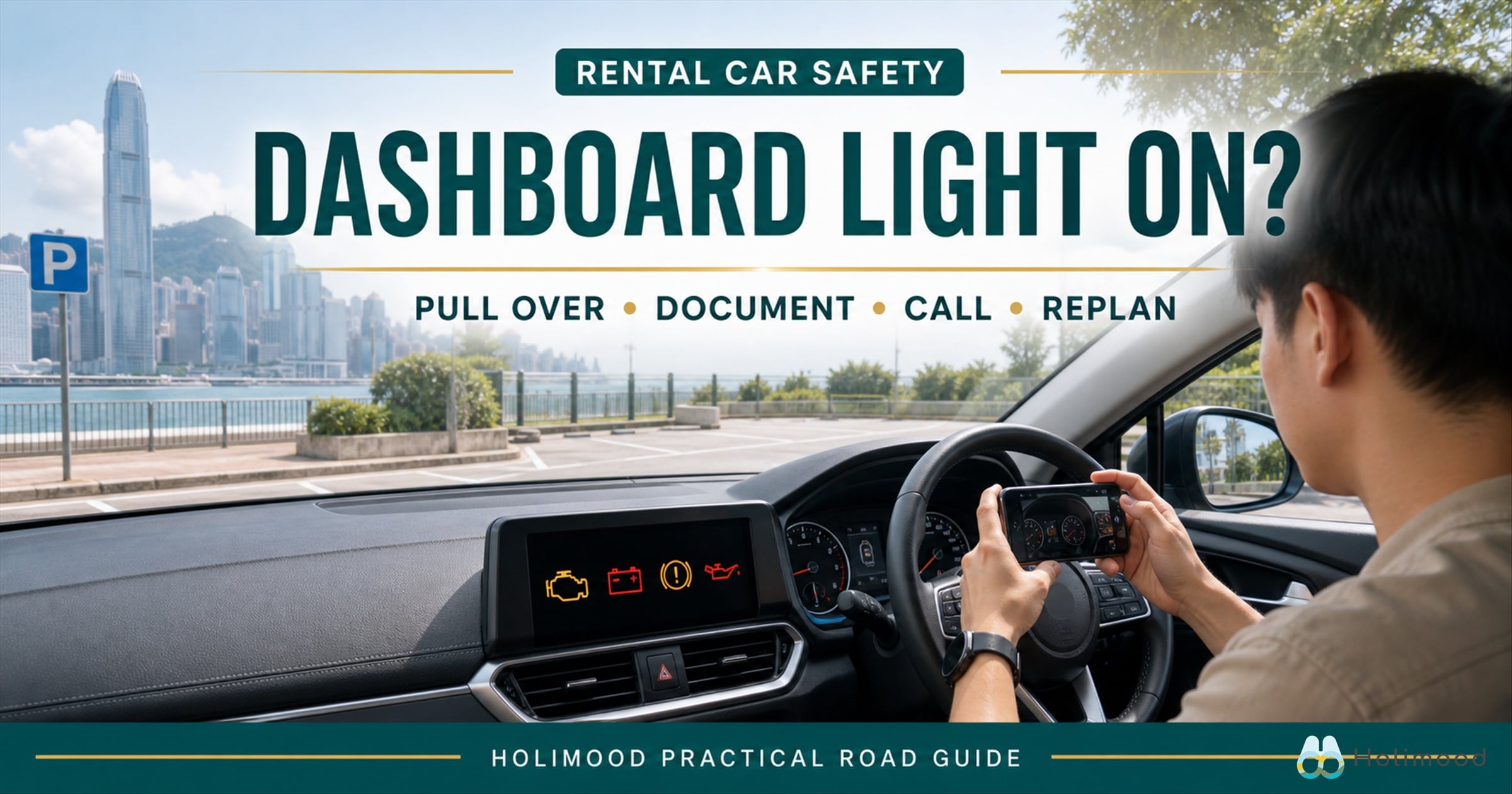
A dashboard symbol is an alert, not a remote diagnosis. The same-looking icon can mean different things on different cars, and urgency may change when it is red, amber, flashing or paired with a message. Use a disciplined sequence: make the scene safe, preserve evidence, contact the vehicle owner and retain written instructions. This travel and handover checklist does not replace the car’s handbook, a mechanic or emergency services.
What should you do in the first minute?
Control the car before interpreting the icon
Keep both hands steady and notice any loss of power, heavy steering, changed braking or rising temperature. Check mirrors, signal and slow progressively toward a safe place. Do not hold a phone in your driving view, and do not stop on a bend, exit, live tunnel lane or other unprotected area. Hong Kong’s Transport Department Road Users’ Code is a useful general safety reference; signs and instructions from police or road staff take priority.
Assess the warning together with vehicle behaviour
Colour alone cannot confirm that it is safe to continue. Stop driving if the warning relates to oil pressure, brakes or overheating, or if you notice smoke, burning smells, unusual noise, leaking fluid or severe vibration. Whether to switch off the engine should follow the model handbook and support advice. If the stopped location is hazardous, move passengers away from traffic before making calls or taking detailed photos. The UK Highway Code’s breakdown guidance similarly puts personal safety first.
| Observed condition | Immediate response | Avoid |
|---|---|---|
| Light on, controls still feel normal | Pull over safely, document it and call the provider | Clearing a code and continuing a long trip |
| Braking, steering, power or temperature changes | Stop driving, warn other traffic appropriately and wait | Forcing the car to the destination |
| Smoke, burning smell, fluid or fire risk | Move people away from the vehicle and traffic; seek help | Opening hot components or attempting repair |
| The stopping place is dangerous | Prioritise people and follow road-staff instructions | Standing beside a live lane to film |
What photos and records should you keep?
First photograph the entire instrument cluster, then the warning icon. Record mileage, fuel or charge level, gear position and time. Capture the complete text if the infotainment screen shows a message. Add photos around the vehicle, near the tyres, of the stopping location and road surface. A close-up icon without context may be difficult to match to the car or event later.
- Booking number, registration, model and registered driver;
- when and where the warning first appeared, plus approximate speed;
- any sound, smell, vibration, power or control change;
- cluster overview, close-up, mileage and exterior condition;
- call time, contact person, case number and instructions.
Do not top up fluids, disconnect the battery, remove fuses, connect a diagnostic tool or clear a code without permission. That may erase evidence or conflict with the rental terms. The Highway Code’s driver and vehicle condition rules are a useful pre-trip reference, while the rental handbook and Hong Kong rules govern the actual response.
How do you make a clear, traceable support call?
Start with four facts: whether everyone is safe, where the car is stopped, which warning is visible and whether the car behaves abnormally. Send photos, then ask whether to switch off the engine, whether a short move is authorised, the assistance arrival time, whether towing or replacement is planned, and who should initially pay any authorised expense. After the call, repeat the instructions in a message and ask the provider to confirm.
Three common misconceptions
“Amber always means keep driving.” Colour is only one clue; check the model handbook, message and symptoms.
“A restart fixed it.” An intermittent warning still needs documentation and disclosure.
“Driving it back is simplest.” An unauthorised long drive may worsen damage and complicate responsibility.
How should you replan the trip and match a Holimood rental?
Split the remaining plan into must-reach, delayable and cancellable items. Update companions and the next booking point without promising an uncertain recovery time. If a replacement is arranged, photograph its exterior, cluster, fuel or charge and mileage, and confirm that the first car’s condition has been logged. If the trip cannot continue, use public transport or a taxi where practical, keep reasonable receipts and follow the rental terms for any claim.
Prepare with Holimood’s Hong Kong car rental guide, deposit and insurance guide, and rainy-day return checklist. If a saloon fits the group, luggage and route, review the BMW 218iA GC M Sport / 530A Luxury daily or weekly rental. Live availability, registered-driver rules, deposit, excess, roadside support and replacement arrangements must be confirmed on the current booking page and with the supplier.
FAQ: rental-car dashboard warning lights
The car still drives normally. Can I return it myself?
Do not assume so. Pull over, report the warning, symptoms and distance, and obtain written permission. Stop if controls, temperature, smell or fluid condition is abnormal.
Is one close-up photo enough?
No. Include the full cluster, mileage, complete message, exterior views and stopping environment, plus time, road and symptoms.
Can I connect a scanner or clear the code?
Not without written permission from the vehicle owner or rental provider. Preserve the original state for qualified support.
Should passengers stay inside while waiting?
It depends on traffic, weather, the stopping place and road-staff instructions. If the location is hazardous, move people away from traffic first.
Are replacement transport costs always reimbursed?
No. Coverage depends on terms, cause, authorisation and receipts. Obtain a case number and written handling instructions before spending where possible.
Compare vehicle fit, registered-driver rules, insurance excess, roadside assistance and replacement procedures, then leave a buffer that never pressures you to drive unsafely. Start by checking the latest Holimood rental details. Subscribe to the Holimood Newsletter for more practical trip checklists.
This post is also available in:
 繁體中文
繁體中文  简体中文
简体中文

