
Quick conclusion
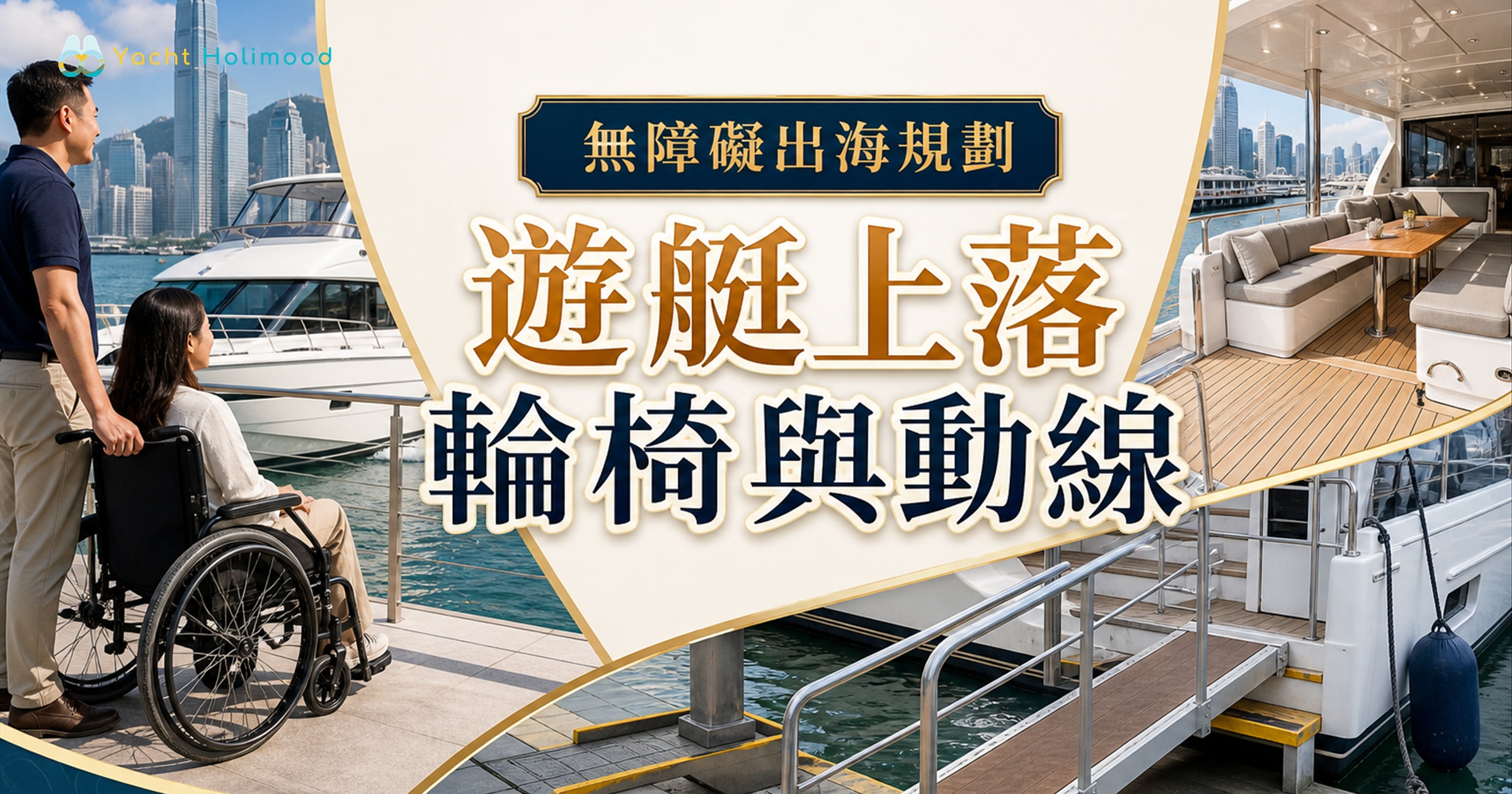
When arranging for wheelchair users, slow-moving people or the elderly to participate in yacht activities, the key point is not just to ask “can they get on the boat?” but to check the complete path from the meeting point to the cabin one by one: drop-off location, pier pavement, ramp or steps, height difference between ship and shore, boarding steps, assisting hands, wheelchair storage, toilets, seats and emergency disembarkation methods. Before booking, you should submit your requirements in text and photos to the operator, requesting a written response on the specified date, dock, and vessel; no yacht should be described as fully accessible without confirmation.
If there are members using wheelchairs, walking frames or canes at family or company events, they should first ensure that each step of movement is safe and dignified. Readable Hong Kong Yachting Routes and Water Sports Guide, then ask Yacht Holimood using the list in this article.
Sort out your needs first: don’t just write “accompanying elders”
For the same mobility problem, the actual needs may be completely different. Some people can walk up several stairs with handrails, but cannot stand on the floating dock for a long time; some people can walk short distances, but the wheelchair is only for long-distance use; and some people need to stay in the wheelchair for the entire journey and cannot be picked up and transferred by their companions. The inquiry should indicate whether the wheelchair is manual or electric, its size and weight, whether the user can stand or shift for a short period of time, the level of tolerance it can tolerate, whether it requires assistance from two people, and whether there are any breathing, balance or fatigue restrictions. This information is for arrangement purposes only and travelers should not be required to disclose unnecessary diagnoses.
Divide the path into five segments: each segment may have obstacles
Don’t just look at cabin photos. The locations where difficulties are most likely to arise are often from the street to the pier entrance, from the entrance to the waiting area, from the shore to the pontoon, from the pontoon to the side of the boat, and from the pedals to the seats. Tides, wind waves and the passing of other ships will cause the height difference and shaking between the ship and the shore to change; the same ship may have different difficulty getting on and off different piers. It is recommended to require the operator to provide recent photos or videos, including the narrowest position, number of steps, pedal width, handrails, turning positions and waiting seats, instead of only providing promotional photos.
Comparison table of boarding and onboard conditions
| Check location | Information to be requested | Written confirmation required | Assumptions not to be made |
|---|---|---|---|
| Drop-off and meeting points | Nearest drop-off location, road surface, distance, waiting seats | Vehicle stay time and method of gathering passengers | Taxis or private cars must go directly to the boat. |
| Piers and pontoons | Slope, steps, handrails, narrowest position, tidal influence | Actual landing point and alternative terminal during the specified period | A ramp means that a wheelchair can pass independently |
| Boarding steps | Width, load-bearing, handrails, height difference between ship and shore | Whether the wheelchair can pass with a person; how many assistors are needed? | The crew must be able to lift people or electric wheelchairs |
| Main deck and cabin | Threshold, passage, floor, anti-skid, seat height | Where to park wheelchairs and how to secure them while sailing | The promotional photos look spacious and can be turned freely |
| Restrooms and emergency disembarkation | Entrance width, grade, handrails, lighting, assembly points | Escort methods, emergency procedures and areas that cannot be used | Restrooms on board are equivalent to accessible restrooms on land |
Three common misconceptions
Misunderstanding 1: You will definitely be able to board the ship if you have assistance.Human hands cannot replace proper weight bearing, pedal width and safety procedures, and lifting participants without consent may also cause injury or discomfort.Myth 2: Manual wheelchairs work, but so do electric wheelchairs.Electric wheelchairs are usually heavier and have different turning and fixation requirements. The model, weight and size must be provided.Misunderstanding 3: As long as you board the ship, there will be no problems later.Toilets, thresholds, slippery surfaces, navigational rocking, and resting positions are equally important as emergency disembarkation.
Movement on board: retain dignity and crew working space
The ideal arrangement is for participants to have a stable seat from the moment they board the ship, without the need for frequent seat changes. Wheelchairs or walking frames must not block exits, stairs, life-saving equipment, or crew sight lines; if they need to be folded and stored, you should first confirm who handles them, where they are placed, and whether they can be easily retrieved before disembarking. There should be space for companions, storage of drinking water and personal belongings next to the seat, and avoid ropes, slippery edges and dining areas with the highest concentration of people.
Weather, emergency and communications filing
Check one to two days before departure and on the day of the event Hong Kong ObservatoryInformation, but the final navigation and boarding safety is still determined by the captain and operator based on on-site conditions. Even if there are no severe weather warnings, wind, tides, slippery roads or temporary dock changes can make an otherwise feasible route difficult. When booking, you should ask clearly about extension, rescheduling, shortened voyage, alternative terminal and refund terms.
How to pair your Yacht Holimood with the right options
When making an inquiry to Yacht Holimood, first provide the date, time period, budget, number of people, pick-up and drop-off area, activity purpose, wheelchair or walker size and weight, transfer ability, acceptable level difference, toilet needs, number of companions and weather record. You can compare first Eight-hour daytime boat river option、Victoria Harbor Evening Cruise Optionsand Sai Kung Day River Boat Options, but these pages are only for preliminary screening and do not mean that accessibility has been confirmed.
The team is required to respond one by one based on the actual ship and terminal: boarding steps, steps, handrails, thresholds, narrowest passages, wheelchair parking and securing, restrooms, available decks, seats, assistance manpower, activity restrictions, captain’s discretion, overtime, deposit, cancellation and bad weather arrangements. If key information cannot be confirmed, the more responsible approach is to choose another ship, another terminal or a shore venue instead of leaving the risk until the day of the event.
Query summary that can be copied directly
“Activity date/time period: __; Number of people: __; Wheelchair type, size, weight: __; User’s ability to stand or shift for a short time: __; Number of people requiring assistance: __; Preferred loading and unloading area: ___; Washing Handroom and seat requirements: . Please provide recent photos/videos of the designated ship and pier, and confirm in writing the steps, steps, handrails, narrowest aisles, wheelchair storage, emergency disembarkation and weather alternative arrangements.”
Practical Checklist for Event Days
- Confirm the ship name, dock location, meeting time and contact person again.
- Check the wheelchair brakes, battery capacity, removable parts and rain protection.
- Put medicines, documents, mobile phone and backup power supply in a waterproof bag.
- Wear non-slip heeled shoes and allow more time to board the ship than the average guest.
- The crew will first explain the life-saving equipment, inaccessible areas and emergency assembly points.
- Complete the verification of seats, wheelchair securement, restroom route and disembarkation sequence before sailing.
FAQ
Does using a wheelchair necessarily prevent you from participating in yachting activities?
No, but participation is subject to designated pier, vessel, footboard, wheelchair weight and dimensions, transferability, sea conditions and available assistance. It must be confirmed in writing item by item and cannot be judged based on the appearance of the ship alone.
Can participants be carried on board by companions?
This decision should not be made on your own. Lifting involves the willingness of the participant, the ability of the helper, the load-bearing of the pedals, the shaking of the ship’s hull and the operating procedures; if it is not clearly confirmed, other solutions should be used.
Which pier is most wheelchair friendly?
There is no one answer that fits all dates. The landing points, tides, pontoons and engineering status will change. Please refer to the designated location on the day of the event to obtain the latest information.
Will there be accessible restrooms on board?
Not to be assumed. Regular shipboard restrooms may have thresholds, narrow doors or steps; check entrance, interior space, handrails and escort methods before booking.
What should I do if there are strong winds and waves on the day of the event?
Comply with the decision of the captain and operator and reschedule, change dock or cancel according to the confirmed terms. Don’t be reluctant to board a ship because your trip has already been paid for.
Sources and Editorial Notes
Subscribe to Holimood Newsletter
Receive more useful planning lists for yachting, outdoor activities and family itineraries in Hong Kong.
This post is also available in:
 繁體中文
繁體中文  简体中文
简体中文

