
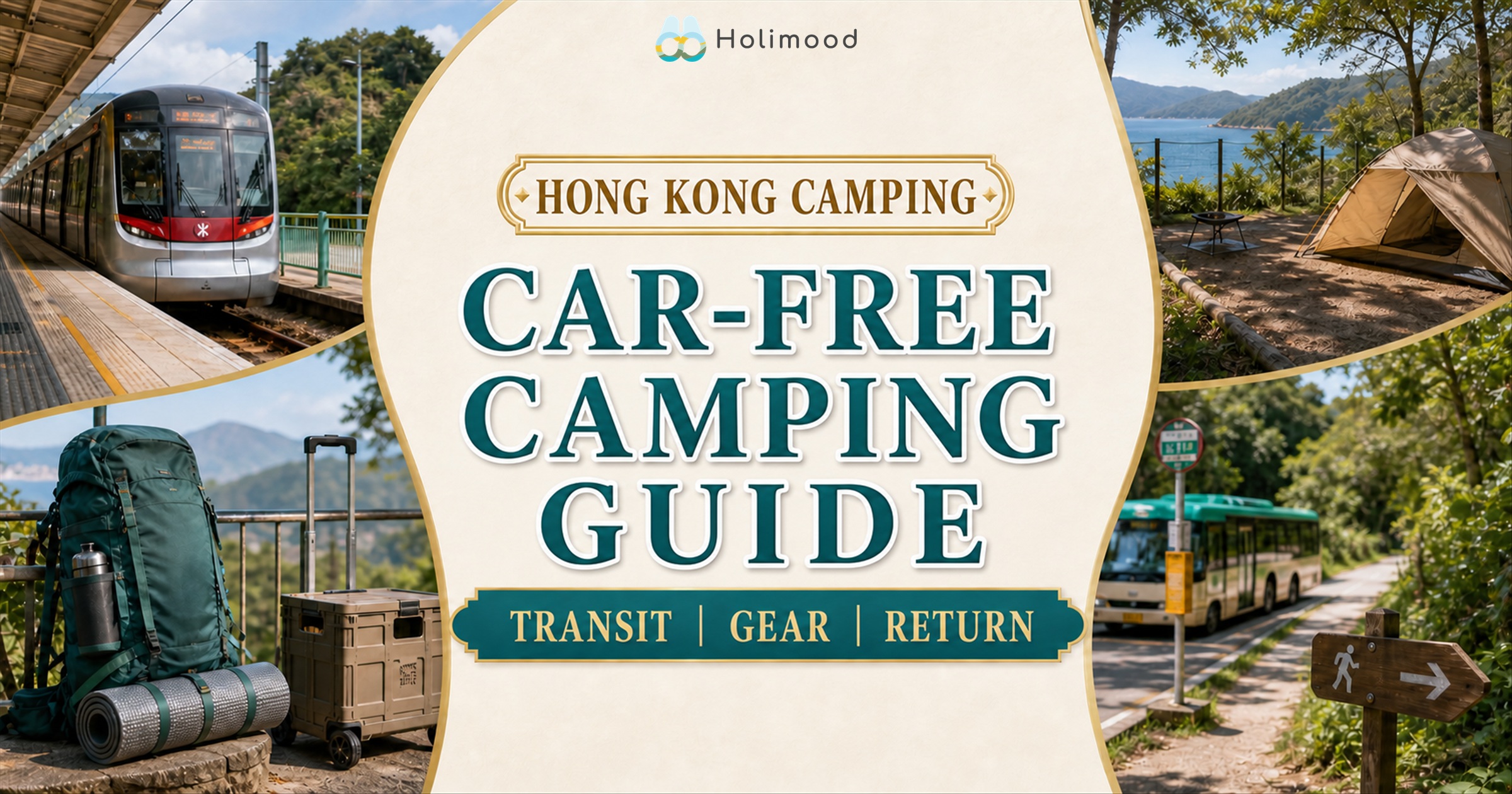
Car-free camping in Hong Kong: public transport, pack weight and the journey home
Start by mapping the complete transport chain
Do not rely on the straight-line distance shown on a map. The real effort comes from transfers, stairs between platforms and stops, uphill access and whether a trolley can cross the final path after rain. Write the journey as five stages: home, rail station, bus or minibus, final stop and campsite. Add the expected time, last departure and baggage constraints for every stage. If the last path is unlit, plan to reach the campsite at least one hour before sunset.
Cross-check official transport and weather information
Review the Hong Kong Observatory nine-day forecast the night before and again on departure day. Confirm current arrival instructions with the campsite and compare them with operator apps and the Transport Department’s public transport information. For routes near country parks, consult the Agriculture, Fisheries and Conservation Department visitor guidance. An unverified trail is not a safe luggage shortcut.
Which camping format works best without a car?
| Format | Main items to carry | Transport burden | Best for |
|---|---|---|---|
| Glamping or camper accommodation | Clothes, personal items and food | Lowest; large sleeping equipment is normally on site | First overnight trip, families or travellers avoiding heavy gear |
| Rented camping set | Rental bundle, sleeping bag, food and consumables | Medium; pickup and return create extra journeys | Learning to pitch a tent without buying everything |
| Lightweight self-camping | Tent, sleep system, cooking and safety kit | Highest; every item must be carried | Campers who understand both their route and pack weight |
When a route has several transfers, equipment-ready glamping or a camper usually reduces uncertainty. A rental set is useful for learning, but you must know its packed dimensions, collection point and return deadline. For self-camping, never judge the load by tent weight alone: poles, pegs, groundsheet, water and food can double the burden.
How should you divide camping gear for public transport?
Use four manageable modules
Separate sleeping, shelter, food and personal equipment. Two people can split poles, flysheet and groundsheet, while each person keeps rainwear, lighting, essential medication, water and a ready-to-eat meal. Secure poles so they do not protrude. Fuel must comply with the rules of the transport operator and campsite. A trolley helps on level ground, but becomes a liability on stairs, gravel and mud, so every bag should remain liftable for a short distance.
Run a twenty-minute loaded practice walk
Pack the exact items you intend to take and walk continuously for twenty minutes, including stairs, tight turns and a simulated transfer. Numb shoulders, a sharply slower pace or repeated hand changes are signs to remove duplicate items. Do not cut essential water simply to lower weight. Only rely on a refill point after the campsite confirms it is available and suitable.
- Carry one headlamp per person and a compact backup power bank.
- Use quick-dry layers instead of several bulky outfits.
- Separate food and wet clothing in sealed bags.
- Keep travel money, transit card and phone power available for the return.
- Avoid full-size cookware for situations that are merely possible.
Decide the return plan before departure
The overlooked problems are wet tents, rubbish and the last bus. Confirm checkout time, waste disposal and cleaning facilities. A wet tent is heavier and should not be spread across a bus stop for repacking. Carry two robust waterproof bags so wet gear stays separate from dry clothing, and allow at least thirty minutes more than the outward journey.
Set three stop conditions
Cancel or leave when an official warning or campsite closure makes outdoor activity unsuitable, when someone shows persistent illness, heat stress or hypothermia signs, or when delays make a safe daylight arrival impossible. Save a fallback route before leaving home.
How to match a Holimood camping service
Holimood brings together glamping, camper accommodation, self-camping and equipment rental options, allowing readers to compare location, group size, facilities and dates. To minimise carrying, review an equipment-ready option such as the Ma Wan cabin experience. To learn tent camping without buying a complete kit, compare the two-person camping-set rental. If large equipment can be delivered to an approved campsite, check the actual coverage of the designated-campsite delivery set.
Before booking, verify availability, collection and return points, deposits, extra fees, weather arrangements, facilities and baggage dimensions on the current product page. Transport schedules and terms can change, so the product, campsite and operator information for your travel date is authoritative.
Compare equipment-ready stays, city pickup rentals and campsite delivery, then test the final access route against this checklist.
Three common car-free camping mistakes
“Near a bus stop” means easy access
The last section may still contain stairs, slopes or an unlit path. Ask for the real walking time and whether wheeled luggage can pass.
A rented set has no weight problem
You still need to move it from pickup to camp and return it on time. Request the packed size and number of pieces before choosing public transport.
The journey home can be decided at checkout
Weekend rural services may involve queues, and wet gear slows packing. Write down the latest safe departure, fallback route and group meeting point before the trip.
Frequently asked questions
Should a first-time car-free camper choose glamping or self-camping?
If you have never carried and pitched a full sleep system, equipment-ready glamping or camper accommodation is easier to manage. Progress to a rental set or lightweight self-camping after gaining experience.
Is a trolley better than a backpack on buses?
It can help on level, accessible routes, but stairs, narrow minibuses and muddy paths can make it harder. Judge the complete route, not just capacity.
Can I buy all food after reaching camp?
Only if the campsite confirms a reliable nearby shop and opening hours. Always retain drinking water and at least one meal that needs no cooking.
How should a wet tent be carried home?
Shake off loose soil, seal it in a heavy waterproof bag, then fully open, clean and dry it as soon as you return. Do not obstruct a stop or allow water to leak.
What should I verify before booking?
Check the final transport leg, arrival and checkout times, included equipment, collection and return process, deposits and extras, and bad-weather arrangements.
Treat transport as part of your camping equipment
A successful car-free trip is not about moving the most gear into the countryside. Choose a suitable stay or rental model, complete a loaded walking test, and set last-service and wet-weather fallbacks before booking.
This post is also available in:
 繁體中文
繁體中文  简体中文
简体中文

