
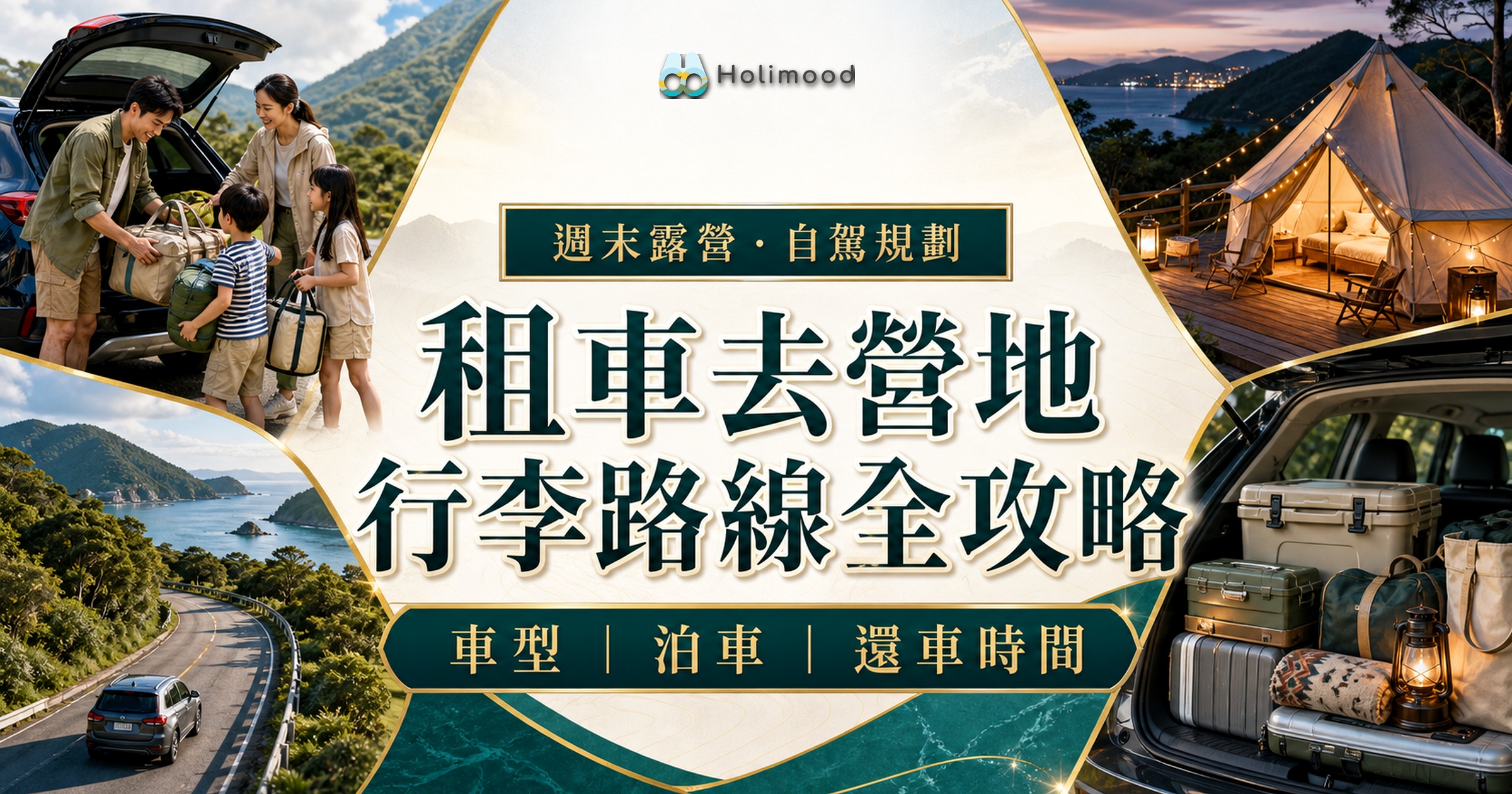
[Camping self-driving route] Rent a car in Hong Kong to go to the campsite: luggage space, up and down slopes and return time planning
The key point of self-driving camping in Hong Kong is not to “have a car and go”, but to first confirm the campground route, luggage space, parking arrangements and return time, and then choose a suitable car model and accommodation plan. If your itinerary involves camping, glamping or family overnight stays, you can refer toHong Kong car rental guide, and cooperate with the check-in time, transportation and surcharge information on the campground page to reduce the risk of changing routes on the spot, moving luggage or returning the car overtime.
When planning a camping trip, many people first look at photos of the campsite, but rarely calculate the actual transportation costs: tents, refrigerators, folding chairs, barbecue ingredients, children’s supplies or pet supplies often take up more space than they think. The advantage of self-driving is that you can store your equipment at the back of the car, and it is also convenient to purchase ingredients before entering the camp. However, some campsites in Hong Kong are located on Lantau Island, Yuen Long, North District or rural roads. Narrow roads, inclined roads, night lighting and parking distances will affect the experience. The following takes “pre-rental planning” as the main line to organize practical inspection methods from car selection, route, camp facilities to return time.
What should you compare before going camping and driving?
| planning project | Contents to be confirmed | Suitable for the situation | Common risks |
|---|---|---|---|
| Luggage space | Tent, sleeping bag, food, refrigerator, stroller, pet supplies | Parent-child, group or self-bred camping equipment | The rear of the car is not enough, you have to put your luggage on the seats and the ride is uncomfortable |
| Car model selection | Five-passenger car, seven-passenger car, MPV or higher chassis model | 3 to 6 people, long distance or multiple equipment | The car body is too big for narrow roads; the car is too small for carrying cargo |
| camp road | Whether it is necessary to drive on inclined roads, gravel roads, village roads or restrict vehicle access | Lantau Island, North District, Yuen Long suburban campsites | It is more difficult to identify intersections at night and the carrying distance increases |
| Return time | Check-out, lunch, gas, car wash and return buffer | Two days and one night or three days and two nights | Disputes over timeout, insufficient oil or cleaning fees |
The first step: Use “number of people + equipment” to reverse the car model
If only two adults are staying overnight at Glamping Camp, an ordinary five-passenger car is usually enough; but if a family of four is bringing children, BBQ ingredients, folding tables and chairs, and extra clothes, a seven-passenger car or MPV will be more secure. When making a decision, don’t just look at the number of seats. You should also list the shared equipment other than “one backpack per person”, such as ice, drinks, fans, mosquito repellents, rain gear, slippers and chargers. If you need to bring your own tent, the length of the tent poles may also affect how you place it at the rear of the vehicle.
Arrive before renting a carHolimood Hong Kong car rental category pageCompare different car models and terms, then check availability by actual number of people, pick-up and drop-off location and rental period. The platform page provides access to car models and prices, but the actual deposit, insurance, deductible, mileage, pickup and return arrangements and surcharges should be confirmed by the booking page or customer service.
Step 2: Check the parking and carrying distance when choosing a campsite
Camping accommodation does not necessarily mean that the car can reach the tent directly. byLanggao Changan luxury camperFor example, the focus is on the beach environment, water activities and campervan accommodation at Cheung Sha on Lower Lantau Island. When planning the itinerary, it is necessary to allow for transportation on Lantau Island, time to enter the camp, and time to organize equipment after beach activities. If selectedNutsCamping Kam Tin Campervan, you should pay attention to whether the campground needs to provide a license plate in advance for parking registration, whether cooking is allowed next to the camper, and whether there are restrictions on the use of BBQ stoves or campground facilities.
For family or friend gatherings that want more complete indoor equipment,Starship interstellar space camperThese larger accommodation options may provide more indoor space and entertainment facilities, but you should also check check-in, check-out, parking capacity, barbecue arrangements and on-site payment methods. When choosing a campsite, you should not only look at whether the photos are attractive, but also ask questions such as “where is the car parked?” “How long does it take to walk from the parking space to the accommodation?” and “Is it convenient to carry luggage when it rains?”
Step 3: Route planning should allow for weather, supplies and night driving risks
Common self-driving routes for camping in Hong Kong include Lantau Island seaside campground, Yuen Long Kam Tin campground, North District Lin Ma Hang and Tai Po seaside activity spots. Some roads or areas on Lantau Island may involve traffic restrictions, please check before departureTransport DepartmentThe latest transportation arrangements; you should also check if you encounter thunderstorms, strong winds or extremely hot weatherHong Kong Observatoryforecast. If your itinerary includes activities near country parks, please refer toAgriculture, Fisheries and Conservation DepartmentCountryside safety and facilities information.
In practice, it is recommended to divide the route into three sections: after picking up the car, go to the supermarket or market for supplies; arrive at the campsite in the afternoon according to the check-in time; and arrange lunch, refueling and return the car after checking out the next day. Don’t set the return time just close to the check-out time, because it will take time to pack up the tent, get ready, take photos and check the vehicle, and have children getting on and off the vehicle. If the camp is in the countryside, avoid over-reliance on mobile phone navigation when leaving at night. It is best to download offline maps and confirm the main exits first.
Three common misunderstandings: Self-driving camping is not an ordinary car rental in urban areas
Misunderstanding 1: A five-passenger car must be the cheapest, so it is the most cost-effective
The daily rent for a five-passenger car may be lower, but if you have so much luggage that you need to compress the seating space, long distances will be very tiring. For multi-person camping, “comfort of each passenger + safety and security of equipment” should be calculated, not just rent.
Misunderstanding 2: If you stay in a campervan, you don’t have to worry about transportation.
Camper vans have provided accommodation space, but you still need to plan for going to the campsite, purchasing ingredients, carrying supplies, parking registration, and returning the vehicle after check-out. Some campsites do not accept changes to the number of people or facilities on the spot, so you should check the terms on the product page first.
Misunderstanding 3: Returning the car late is just a small extra charge
Different car rental plans handle overtime, fuel capacity, cleaning, damage and insurance deductibles differently. There is likely to be sand, mud, food smell or wet towels in the car after camping. Time should be reserved for cleaning and taking photos before returning the car to avoid disputes.
Why use Holimood to compare car rental and camping options together?
Decisions about camping self-driving usually span two types of services: on one side are car models, rental periods, pick-up and return points, deposits and insurance; on the other side are campsite location, check-in time, activity facilities, BBQ, pets and children arrangements. Through Holimood, readers can firstHong Kong car rental guideUnderstand the basic terms of car rental, and then go to the corresponding car rental and camping pages to compare availability, prices and reservation terms. This approach is suitable for families, couples and groups of friends, as the itinerary is no longer just a one-night stay, but a complete weekend arrangement consisting of transportation, equipment, meals, weather and check-out time.
It should be noted that the platform information can assist in centralized comparison, but the actual booking date, price, payment method, cancellation or rescheduling, deposit, insurance, deductible, parking and on-site charges should be subject to the relevant product page, booking page or customer service confirmation. When it comes to safety or road restrictions, on-site guidelines from government departments and campsites should also prevail.
Pre-departure checklist
- Confirm the number of people traveling with you, the size of each person’s luggage and shared equipment.
- When choosing a car model, reserve at least one seat or space at the rear of the car for a wet and food area.
- View campground check-in, check-out, parking, pets, BBQ, and on-site payment arrangements.
- Add gas stations, supermarkets, parking lots, camp entrances and return locations to the navigation.
- Check the observatory weather and camp notices the day before departure.
- When picking up and returning the car, photos will be taken to record the body, fuel level, mileage and cabin condition.
Further reading and next steps
If you are still comparing different camping styles, you can readGlamping, campervan vs. car camping comparison, and then cooperateHong Kong car rental guideSet the number of days and budget for renting a car. If you want to directly view the bookable plans, you can browseHolimood Hong Kong car rental optionsand related camping accommodation pages, and the latest supply, price and terms on the product page shall prevail.
FAQ: Frequently Asked Questions about Camping and Self-Driving in Hong Kong
1. Should I rent a five-passenger car or a seven-passenger car for self-driving camping?
If there are only two to three people and not much equipment, a five-passenger car is usually enough; if there is a family of four and many people bring food, tents or large refrigerators, a seven-passenger car or MPV is safer. It is recommended to make a judgment based on luggage volume and ride comfort.
2. Do I need special insurance when renting a car to go to the campground?
Car rental insurance, deductibles and third-party liability arrangements will vary by plan. Camping trips may involve rural roads, parking, and multiple people getting on and off the vehicle. You should read the insurance, deposit, overtime and damage terms carefully before booking.
3. Do campervan campsites always have parking spaces?
uncertain. Some campsites have free parking or require pre-registration of license plates, while others require parking nearby and walking into the campsite. Before booking, you should check the traffic and parking information on the product page and confirm with customer service if necessary.
4. What is the safest way to arrange the return time?
It is recommended to set aside three to four hours after checking out of the campground for lunch, refueling, cleaning the car, traffic buffering, and return inspection. Extra time should be reserved on weekends or public holidays to avoid overtime due to traffic jams or supply delays.
This post is also available in:
 繁體中文
繁體中文  简体中文
简体中文
